Sunday, September 28, 2014

Lots of Craziness in the Amazon

Mutation

20578926 

Title: Mutation
Author: Roland Smith
Series: Marty and Grace / Cryptid Hunters
Publisher: Scholastic
Publication Date: September 30 2014
Source: Netgalley
Purchase: pre-order only

Goodreads Summary:
Monsters of legend come to life! The final thrilling title in Roland Smith's popular series.

Marty and his best friend, Luther, have managed to rescue Marty's cousin Grace from the clutches of the nefarious pseudo-naturalist Noah Blackwood, but their most dangerous mission lies ahead of them. Marty's parents have been missing in Brazil for months and their trail has all but run cold. With time running out, Marty and the Cryptos Island crew race off for Brazil -- where they discover that Noah Blackwood has twisted the natural order of things beyond their wildest, most terrifying dreams.

My Thoughts:
This book was great. I loved every moment of it. It was fast paced and just fantastic. I loved the characters and the great twists that came up throughout the novel. I would expect no less from the conclusion to such a great series. The technology in this book was awesome, and it was highly suspenceful - and answered every question you could ave possibly had about the series. So, moving on to - 


***SPOILERS***

  
So, dinosaurs. Also jungle men. Crazy cryptids, and of course all your favorite characters. This book as I have already said, was phenominal, but sometimes quite unbelievable. However, what's the point of reading fiction if you want it to be realistic? So I really loved all the technology and awesomeness that was related with Ted. Another thing I really liked was the boy trio - Marty, Luther, and Dylan - they were great. I thought they acted like real teenage boys - none of that sophisticated stuff. :) I thought the thing at the end with clones was very interesting - and it explained a lot. In fact the last few chapters pretty much explained every question I ever had about the story. 
So, I guess really that's all I have to say - it was a hilarious and wonderful journey, and I'm sad it's ended. Hats off to Smith.

Rating:
 
 Recommendations: I would recommend this book to anyone who likes middle grade fiction, or adventure stories. This series was very unique and can appeal to every age - I'm 20 and I loved it, and I know women into their forties who loved it - basically it's a fantastic book and I recommend it to anyone who loves to read.

Saturday, September 20, 2014

Such stuff as books are made on: Shakespeare-inspired literature


I recently finished The Shakespeare Stealer by Gary L. Blackwood. It was a fun read, with likeable characters, good historical detail, and plenty of suspense and plot twists, though there was one twist that went too far, in my opinion. This prompted me to think about some of the other Shakespearean-inspired books I've read, and I decided to compile a list of them for you. (Yay!) Brevity is the soul of wit, so I'll try to briefly outline each book and give my opinion on it, but, judging from my previous posts, I have a tendency to go the Polonius route and write way more than I thought I would.


Historical Shakespeare

36333
Title: Loving Will Shakespeare
Author: Carolyn Meyer
Date of Publication: October 1st 2006
Publisher: HMH Books for Young Readers
In all the stories told about William Shakespeare, there is usually one vitally important person who is either omitted or glossed over, and that is his wife, Anne Hathaway. Married to Will Shakespeare at an older age and because she was pregnant, Anne was left to raise their children in Stratford-upon-Avon while her husband went to London and became a famous playwright. How heartbreaking and lonely it must have been for her when their only son died and his father was absent. It's all but impossible for us to know what the relationship between Shakespeare and his wife was really like, but I like to think that the facts present a long-standing, long-suffering marriage with a passionate beginning and a serene ending, though there may have been some rocky patches in the middle. Loving Will Shakespeare tells Anne Hathaway's side of the story, focusing on her teenage and early-adult years up to the moment of her marriage with Will. It is a historically informative novel that tries to get at the heart of one of the most interesting and ambiguous romances in all of history. For Anne, Will is not the famous playwright; he is simply the kind, spirited childhood friend who makes her laugh. But to the rest of the world he is the famous playwright, and Anne will find that loving him is not always easy. I only have good things to say about this book. I enjoyed the characters, the story, and the setting, and I learned a lot about Shakespeare's childhood and his home, as well as about the girl who would eventually become his wife. Loving Will Shakespeare is a lively historical romance with a bittersweet ending.


42057
Title: The Shakespeare Stealer
Author: Gary L. Blackwood
Series: The Shakespeare Stealer
Date of Publication: July 1st 2000
Publisher: Puffin
My review of Gary Blackwood's The Shakespeare Stealer is not quite as glowing as my review of Carolyn Meyer's novel. I felt that The Shakespeare Stealer had a very promising start; I was completely hooked for the first half of the book. When Widge, an orphan from the English countryside, is ordered by his owner to steal Shakespeare's play Hamlet, the stakes are high. His attempts continually foiled, he has to keep returning night after night to the Globe Theatre to try again, and if he fails, there's no knowing what his grim and violent owner will do to him. When Widge meets the members of Shakespeare's company and gets taken into their little "family," the stakes get even higher. If his owner finds him without the script of Hamlet in his possession, it could mean a beating or even death, but if his new-found friends find out that he's trying to steal their play, it will mean being cast out of the only family Widge has ever known. The stakes are indeed high, and Widge is caught squarely in the middle of two devastating decisions. But then, suddenly, somewhere around the middle leading into the second half of the book, a major plot twist threw me out of the action, and I just didn't care as much about the book after that. It may have been a twist in the story, but it was a cliché in the larger realm of Shakespearean retellings and similar stories, and it was an unreality in the historical Shakespeare's time period. So, while I appreciate the way that the author lead up to this particular twist and made the rest of the story consistent with it, I just found it so cliché and unrealistic that I couldn't get back into the story after it happened. However, it was still a fairly good story and it was definitely historically informative; I don't think I've read any other Shakespearean novel that dealt so much with the specific members of his acting company.


7199670
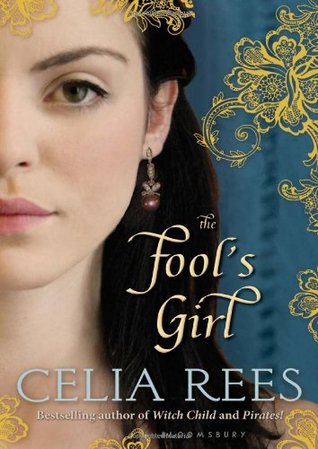
Title: The Fool's Girl
Author: Celia Rees
Date of Publication: July 20th 2010
Publisher: Bloomsbury USA Childrens

The Fool's Girl, by Celia Rees, is both a historical fiction about Shakespeare himself and a reimagining of one of his best-loved comedies, Twelfth Night. This novel picks up where the story of Twelfth Night leaves off, introducing Violetta, the daughter of Viola and Orsino, as the new heroine. When her home is destroyed, Violetta flees to London with her companion, Feste, and the two outcasts encounter William Shakespeare and his acting company, who agree to help the pair face off against their arch-nemesis, Malvolio. This book was doubly fun, because it gave me historical Shakespeare and a fantasy on one of his plays. The portrayal of Shakespeare in this novel is one of my favorite characterizations of the Bard; I found him likeable, clever, caring, and adventurous - in other words, everything that I like to think the real William Shakespeare actually was. And hey, Anne Hathaway was in this book! Not for very long, but still, I was excited! It's a fun adventure with sympathetic characters and plenty of historical detail.

More recent historical Shakespeare

7381798
Title: Oregon Shakespeare Festival
Author: Kathleen F. Leary and Amy E. Richard
Series: Images of America
Date of Publication: September 9th 2009
Publisher: Arcadia Publishing (SC)

It may just be because I really love the Oregon Shakespeare Festival, but I really enjoyed reading this book. It's not a novel, but a nonfiction compilation of the origins, development, and subsequent history of the Oregon Shakespeare Festival located in Ashland, Oregon. It's very informative and interesting, and it has great pictures, too.


Rewriting Shakespeare

18545
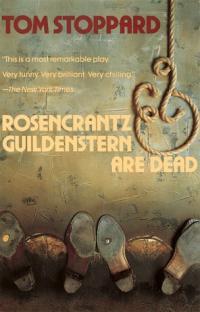
Title: Rosencrantz and Guildenstern are Dead
Author: Tom Stoppard
Date of Publication: January 21st 1994
Publisher: Grove Press
Premiered: 24th August 1966, Edinburgh Fringe Festival, Scotland

Tom Stoppard's tragicomic play Rosencrantz and Guildenstern are Dead is the author's rewriting, from a slightly different viewpoint and in a different literary style, of Shakespeare's Hamlet. Stoppard uses the two tangential characters of Rosencrantz and Guildenstern to raise questions about language, literature, intertextuality, and the secret lives of an author's characters. Goodreads says this about it: "Hamlet told from the worm's-eye view of two minor characters, bewildered Rosencrantz and Guildenstern. Echoes of Waiting for Godot resound, reality and illusion mix, and where fate leads heroes to a tragic but inevitable end." (Wait, did that make sense to you? Because it didn't to me.) Stoppard's play is witty, hilarious, dark, deep, and uncomfortable. And yes, they die at the end. Now don't you want to go read it?


Reimagining Shakespeare 

7964
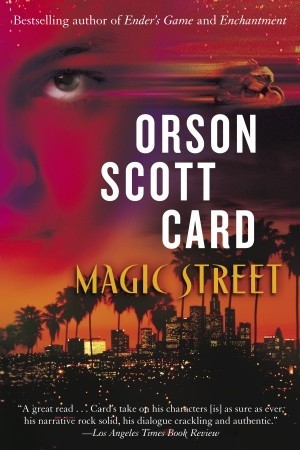
Title: Magic Street
Author: Orson Scott Card
Date of Publication: June 27th 2006
Publisher: Del Rey
Who ever thought that Shakespeare's classic comedy A Midsummer Night's Dream would be retold someday by a famous science-fiction writer who would set the story in a modern African American neighborhood in Los Angeles, California? I never would have thought it up. But it's great! The book is a lot of fun, and the story and characters interact with Shakespeare's original play in fun and interesting ways. It's a gripping story, well-told, with spunky, loveable characters. If you've ever wondered what a Shakespeare play told by Orson Scott Card would be like, here you go. A word of caution, though, there is a scene that's PG-13. You have been warned. If you end up liking Magic Street, you might want to check out Card's similar (but I think better) foray into the world of fantasy, Enchantment. It is also PG-13.

Random Fun Shakespeare

17938417
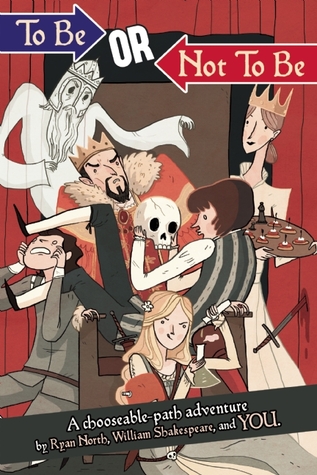
Title: To Be or Not To Be: A Chooseable-Path Adventure
Author: Ryan North & William Shakespeare (and, apparently, YOU)
Date of Publication: September 10th 2013
Publisher: Breadpig (who the heck are they?)
I have not read this book, but it looks awesome. Apparently it's a cross between Hamlet and Choose Your Own Adventure. The title alone is the greatest thing ever.

 6691350
Title: The Shakespeare Encyclopedia
Author: A.D. Cousins (Editor)
Date of Publication: September 17th 2009
Publisher: Firefly Books

This volume contains information about Shakespeare's life, each of his plays, and his poetry. It has beautiful full-color illustrations on just about every page. Basically it is the be-all and end-all of everything Shakespeare related.


If none of these works piqued your interest, there's a whole world of Shakespearean-related books that I haven't even touched on, because I haven't read them. Whether you want a non-fiction biography, a collection of Shakespeare's own writings, or a fantasy on some of his themes, there's something out there for you. Because, for William Shakespeare, all the world's a stage.

Saturday, August 30, 2014

Snow White - Woman of the Night

Tear You Apart 

21520203 

Title: Tear You Apart
Author: Sarah Cross
Series: Beau Rivage
Publisher: Egmont USA
Publication Date: January 27 2015
Source: Netgalley
Purchase: Pre-order only

Goodreads Summary: Faced with a possible loophole to her "Snow White" curse, Viv goes underground, literally, to find the prince who's fated to rescue her. But is life safe in the Underworld worth the price of sacrificing the love that might kill her? 

My Thoughts:
  I had some major problems with this book. First of all I found it really hard to like the main character Viv. She was awful and a complete mess. She didn't know what she wanted, and she didn't want to find out what she wanted, it seemed to me like she was using her excuse as a way to put major life decisions on a permanent hold. She blamed everything on her curse. I guess I can understand some of that, but enough is enough. She needed to learn that the world didn't revolve around her, and that other people also have lives. It really bugged me that she was so quick to ruin other people's lives just to help her own. Viv had real trust issues, insane jealousy issues, and was suspicious of everyone who crossed her path.


CAUTION: SPOILERS


  She was totally willing to take advantage of anyone and everyone, including the dude at her dad's party, and the Prince of the underworld. I hated the scene where Henley, who she previously broke up with, comes to rescue her when her step-mother's car gets a flat. He drops what he's doing and immediately comes to her aid because he loves her. And what does she do? She gets mad at him for sitting next to Regina, when he didn't have a choice. And then she leaves the car in a huff and ignores him for the rest of the party. She even goes so far as to hit on one of the guys there in order to make Henley jealous. But she doesn't just flirt with the guy, no, she kisses him and whispers something dirty in his ear. WHAT? WHO DOES THAT? SHE'S TERRIBLE! Then, Henley smashes the guy's car in because the idiot was kissed by Viv. Man the people in this story remind me of Catherine and Heathcliff from Wuthering Heights. 
  I didn't like the swearing or sexual scenes. Viv was just SO trashy that I found it hard to believe that she had any friends and that she still had a reputation. I also can't believe that the prince would ever want to marry her. 
  Also, can we talk about the fact that this book was horribly graphic????? Way too many crude jokes - but that wasn't even the worst of it. The wedding scene was the worst - seriously, it made me want to vomit. Who in their right mind would make a woman dance in red hot iron shoes??? Okay - I get that fairytales are dark and grimm (see what I did there?) but they are never that graphic. This was graphic - Cross depicted the scene in all its' grossness and horror. She described the way Regina's feet actually melted down to the bone. She made sure the reader understood the pain it was causing the "wicked queen" and the complete horror and repulsion that Viv felt. I was disgusted. No one needs that much detail.
 One thing I will say however is that Cross does know how to connect the reader with her book. When the old huntsman sliced his knife down Viv's chest, I could almost feel the pain, and it made me completely squirmish. Yuck. 
 I really hope that by the end of the book Viv had learned her lesson. I think she may have - and living away from people in the forest with cute fuzzy animals will definitely help her bitterness drain away. If she appears in any of the other Beau Rivage books I hope she is a changed person. And I hope she appreciates her friends for who they are. For how kind they were to her when she's only ever been awful. And above all, I hope that she and Henley have their Happily Ever After - because he deserves it.

Rating:  


Disclaimer: My review of this book seems really negative, but I did enjoy reading the book and was completely hooked. I did like the way the fairytales were portrayed and how Cross integrated them into modern society. I also really like Kill Me Softly - and I hope that the next book in the series won't be quite so crass. But what can a blogger do?

Les Miserables: The Original French Concept Album


Most people don't know that the musical Les Misérables was originally going to be in French. In fact, the writers, Alain Boublil and Claude-Michel Schönberg (both of whom are French) created an entire concept album in French before the producer Cameron Mackintosh asked them to turn it into a musical in the English language. And the product of that conversation is the musical we know today as Les Misérables, one of the most popular and longest running musicals in the history of theatre.

But the original French concept album still exists, and is very interesting as a prototype; many of the melodies from the current musical can be found in the concept album, though often attached to different lyrics and occurring at different moments in the plot. Some of the lyrics are also the same (though of course, in French rather than English). But there is also much that is different. The story itself varies in places from the current musical, with some parts left out and others added or changed. In many ways, the concept album follows the book more closely than the current musical does, but there are a few places where it deviates more from the book than does the current musical. There are moments in the concept album that send chills down your spine, but there are also moments that disappoint.

For example, the song that takes the place of "Castle on a Cloud," entitled "My Prince is on the Way," is absolutely beautiful and in some ways preferable to the current one, and the song that introduces us to M. Thenardier, "The Inkeeper's Motto," is, unlike "Master of the House," entirely appropriate. "À la Volonté du Peuple" (translated as "To the Will of the People"), replaces "Do You Hear the People Sing" with the same melody and more poetic lyrics. One scene in the concept album that I definitely prefer to the parallel scene in the current musical is Gavroche's death. But the song that takes the place of the current "Red and Black" is rather disappointing (it's just Marius soloing), and while the song that Eponine sings instead of "On My Own" is lovely, it doesn't hold a candle to the current showstopper.

I would like to do a little analysis of the concept album, because, while I still prefer the current version of Les Misérables, the concept album is very thoughtful and well-crafted. At the end of this post I'll share a link to the full text of the concept album (in French with a pretty spot-on English translation beside it) and another link to the music. Alors.

The second track in the concept album is titled, "L'Air de la Misére," or "The Air of Misery," and is sung by Fantine to the tune of "Come to Me" and "On My Own":

La misère n’est mere de personne
la misère est pourtant soeur des hommes
mais personne sur terre n’en veux pour fille
comme bâtarde née dans un cachot de la Bastille
La misère enfante la détresse
bien des vices et toutes les faiblesses
la misére lâche la bête en l’homme
et la mésange alors en chienne errante se tranforme

Then, in the final scene of the musical, entitled "Epilogue: La Lumière," or "Epilogue: The Light," Jean Valjean sings a different set of lyrics to the same tune (this tune is also utilized in the final scene of the current musical, by the way).

La lumière est dans le coeur des hommes 
mais s’épuise de brûler pour personne 
aimez-vous pour vaincre les ténèbres 
tant qu’il y aura partout 
orgueil, ignorance et misère
La lumière, au matin de justice, 
puisse enfin décapiter nos vices 
dans un monde où Dieu pourrait se plaire 
s’il décidait un jour de redescendre sur la terre.

OK, so I know you probably don't speak French (unless you do), but even so, you can probably tell that the two songs are echoing each other significantly. Both songs have the same melody and the same structure, and they use many of the same words and sentence structures. Let me give you an English translation so you can see the similarities more clearly. Here is Fantine's "Air of Misery":

Misery is the mother of no one
Misery is nevertheless sister of men
But no one on earth wants for a daughter
A bastard born in a dungeon of the Bastille 
Misery begets distress [or misery]
Plenty of vices and all weaknesses
Misery looses the beast in man
And the little bird then into a stray dog transforms.

Pretty bleak. But here is Jean Valjean's rewriting of Fantine's ballad:

The light is in the heart of men
But it will stop burning for no one 
Love each other to vanquish the shadows
As long as there is everywhere
Pride, ignorance and misery
The light, on the morning of justice,
Can finally decapitate our vices 
In a world where God could be pleased
If He decided one day to redescend to the earth.

You can see the echoes of Fantine's ballad in the first two lines of Valjean's song: "The light is in the heart of men / But it will stop burning for no one," echoes Fantine's "Misery is the mother of no one / Misery is nevertheless sister of men." Both singers take a subject - Misery or Light - and assign it to the human race, using the words "men" ("les hommes"), or "no one" ("personne"), at the end of each sentence. Moreover, both Fantine and Valjean refer to the vices of men, but while Fantine speaks only of their birth and existence in the world, Valjean reveals that love will one day destroy the vices created by misery. Fantine ends her song by lamenting man's transformation into a beast, but Valjean ends his song with the hope that man can someday transform into a more perfect and God-like being. Fantine's song reflects the uttermost depths of squalor and misery, but Valjean's song comes at the end of his life reflecting love, peace, and transcendence. As I read and listened to Valjean's final revelation, I couldn't help but think of my favorite quote from the novel Les Misérables: "To love or to have loved, that is enough. Ask nothing further. There is no other pearl to be found in the dark folds of life. To love is a consummation" (Hugo 1382). I find this quote echoed nicely in Valjean's song about "The Light."

If you're still here and haven't yet revolted over the length of this post and all the French text in it, I'd like to share one more song from the concept album with you. Here is (slightly shortened) the French text of "To the Will of the People," sung to the tune of "Do You Hear the People Sing" - side by side with an English translation:
À la volonté du peuple
Et à la santé du progrès
Remplis ton coeur d’un vin rebelle
Et à demain, ami fidèle
Nous voulons faire la lumière
Malgrè le masque de la nuit
Pour illuminer notre terre
Et changer la vie.  
À la volonté du people Je fais don de ma volonté
S’il faut mourir pour elle
Moi, je veux être le premier
Le premier nom gravé au marbre du monument d’espoir. 
À la volonté du peuple
Et à la santé du progrès
Remplis ton coeur d’un vin rebelle
Et à demain, ami fidèle
Nous voulons faire la lumière
Malgré le masque de la nuit
Pour illuminer notre terre
Et changer la vie.
To the will of the people
And to the health of progress
Refill your heart with a rebellious wine
And tomorrow, faithful friend
We want to make a light
Despite the mask of the night
To illuminate our land
And to change our lives.
To the will of the people I volunteer myself.
If it is necessary to die for her,
Me, I want to be the first
The first name carved on the marble of the monument of hope.
To the will of the people
And to the health of progress
Refill your heart with a rebellious wine
And tomorrow, faithful friend
We want to make a light
Despite the mask of the night
To illuminate our land
And to change our lives.


Well, I don't really have anything to say after that. If you want to check out the full text of the French concept album (plus an English translation) you can go to this website: http://www.placedauphine.net/translations/ofc.html

Then, if you'd like to hear the full French concept album, you can head over to this playlist on YouTube: http://www.youtube.com/playlist?list=PLE4A332CE9F807D86

If you'd like to read more of my thoughts on Les Misérables and you haven't yet read my review of the novel by Victor Hugo, you can check that out here: http://woodbtwntheworlds.blogspot.com/2014/02/keep-calm-and-love-on-les-miserables.html

Until tomorrow. Adieu.

Tuesday, May 27, 2014

Musings on heroism, death, and music (and this isn't Les Mis) - prompted by Steve Turner's The Band That Played On


Title: The Band That Played On: The Extraordinary Story of the 8 Musicians Who Went Down with the Titanic
Author: Steve Turner
Date of Publication: 2011
Publisher: Thomas Nelson
Number of Pages: 242 (not including picture credits and index)

What Goodreads has to say:

 
"They kept it up to the very end. Only the engulfing ocean had power to drown them into silence. The band was playing 'Nearer, My God, to Thee.' I could hear it distinctly. The end was very close." --CHARLOTTE COLLYER, TITANIC SURVIVOR

The movies, the documentaries, the museum exhibits. They often tell the same story about the "unsinkable" "Titanic," her wealthy passengers, the families torn apart, and the unthinkable end. But never before has "that glorious band"--the group of eight musicians who played on as the "Titanic" slipped deeper and deeper into the Atlantic Ocean--been explored in such depth. Steve Turner's extensive research reveals a fascinating story including dishonest agents, a clairvoyant, social climbers, and a fraudulent violin maker. Read what brought the band members together and how their music served as the haunting soundtrack for one of modern history's most tragic maritime disasters.

[Following this summary on Goodreads are several short book reviews, which you can read here. There's also a pretty good and fairly short review at this website, if you're interested.]
 

What I have to say:

 
The musicians of the Titanic have fascinated me since I first saw the movie - the scene featuring the band playing "Nearer My God To Thee" is my favorite. I always saw them as heroes for not only going down with the ship, but calmly playing a testimonial of their faith as they faced certain death in a matter of hours. Obviously, when I heard about this book while writing a paper on the Titanic and T.S. Eliot, I was very interested, and for good reason; it's an amazing story, and it's well told by Steve Turner.

The first chapter gives some information about the Titanic and the circumstances surrounding the return of its survivors on the Carpathia. Then, for about the first half of the book, the author introduces each of the eight musicians that played on the Titanic, giving their personal and family history from the time of their birth to when they signed onto the Titanic. This part of the book is interesting and important in telling us about all of the musicians and setting up the main event of the drama, but I found it a little tedious and slow at times. The next section of the book deals with the musicians' experience on the ship before disaster struck, with quotes from some of the passengers. Next, of course, comes the main disaster, again with quotes from surviving passengers about the band and the music they played. These two sections were my favorite; I found them engaging and inspiring. The rest of the book deals with the aftermath of the Titanic disaster, especially as it concerns the musicians and their families. The author tells us about memorial services and monuments dedicated to the musicians, as well as what happened to the musicians' families after the disaster and what legal problems they were involved in as a result of their sons' deaths on the Titanic. The final chapter informs readers about a violin which may or not have been the one played by the bandmaster on the Titanic as it went down. Turner gives the evidence for both sides of the argument. When the book was published in 2011, researchers were running tests to confirm (or deny) the authenticity of the violin, and the author speculates in the book that the world will know in 2012 whether or not the violin is authentic. I did some research and discovered that the violin's authenticity was eventually confirmed, and the violin itself was auctioned off for over $1 million (why didn't anybody tell me? I would have liked to own it!) You can read about it and see pictures of the violin here.

One of the best things about this book is that it makes you realize that the musicians on the Titanic were pretty ordinary people up to the moment of the ship's collision. They were all gifted and determined musicians, but apart from that there was nothing particularly extraordinary about them. If they hadn't signed onto the Titanic they would most likely have lived fairly normal lives: pursuing their careers, getting married, traveling - in the end they would have died and the world would eventually have forgotten about them. Even the act of playing their instruments as the ship sank would not be extraordinary in any other context. They merely did their job. And yet the world sees them as heroes.

Another thing this book did for me was to complicate my idea of heroism. In the aftermath of the disaster, many people praised the Titanic's musicians as examples of British heroism. But a few disagreed: Joseph Conrad, author of Heart of Darkness, and the playwright George Bernard Shaw spoke out against the public celebration of the band's heroism. They argued that it would have been much better if, instead of playing the hero, the musicians had taken a lifeboat and reached home in safety. Shaw even suggested that the music played on deck by the band may have convinced passengers that nothing was wrong - until it was too late. He saw the musicians' actions as part of a preordained drama in which everyone was expected to face death bravely and calmly, while playing a hymn, no less.

These arguments are disquieting, to say the least. They are obviously well articulated, and the repercussions of accepting them are earth-shattering. It is the dilemma between the two poems "The Charge of the Light Brigade" and "Dulce et Decorum Est." In other words, is it better to die for your country, or to save you own skin in order to return to your family and friends in safety? I feel an overwhelming admiration for the light brigade, who plunge into battle knowing full well that they cannot hope to win and will probably all die, but I also realize the awful waste, and find that the poet of "Dulce et Decorum Est," hits close to home when he contrasts the horrors of trench warfare with the "old lie" that it is sweet and right to die for one's country. In the end, I suppose I'm a Romantic living in a Modern world, and thus with Modern sensibilities.

Anyway, no matter how disquieting I find Conrad's and Shaw's objections, when all is said and done I find that I cannot see the 8 musicians of the Titanic as anything but heroes. In spite of the fact that they may have been able to reach safety if they hadn't kept on playing, and in spite of the fact that they may have been acting out a Victorian drama, can we really say that a man declaring his faith in God while the ship goes down under him and the icy ocean swirls ever nearer is not a hero?

According to his friends and family, "Nearer My God To Thee" was the favorite hymn of the bandmaster and lead violinist, Wallace Hartley. There is even one source, possibly inaccurate, claiming that Hartley had been reserving the hymn for his funeral. When he realized that he was going to die on the Titanic, Hartley stopped playing ragtime, as the band had been doing thus far, and struck up a desperate declaration of faith. As a fellow musician is quoted as saying in Turner's book, "I believe, knowing they were doomed as a result of their own heroism, the members of the ship's orchestra thus commended their own souls to God, giving expression to their petition in the notes of their instruments" (148-149). Across the ocean and across the years, the act of Wallace Hartley and his fellow band-members stands as a declaration of faith. It survived the sinking of the Titanic amid a churning Atlantic Ocean, and it will survive the churning of the present times, amid which faith and integrity seem to have sunk.

So I ask you, faithful and persistent reader (thanks for sticking with me through my ponderings), if you stood on the deck of the Titanic with a violin resting on your shoulder and a bow in your hand, watching your chances of escape gradually grow lower and lower, and realizing the inevitable: that you were going to drown in the Atlantic very soon - what song would you play?

Perhaps it is unoriginal of me, but if I stood in that position, I really think, along with Wallace Hartley, that "I would [not] do better than play...'Nearer My God To Thee.'"

Thursday, May 15, 2014

The House of Hades by Rick Riordan

http://bookerie.files.wordpress.com/2013/10/rick-riordan-house-of-hades.gif 
Title: The House of Hades
Author: Rick Riordan
Series: The Heroes of Olympus
Date of Publication: October 8th 2013
Publisher: Hyperion Books

What Goodreads has to say:

At the conclusion of The Mark of Athena, Annabeth and Percy tumble into a pit leading straight to the Underworld. The other five demigods have to put aside their grief and follow Percy’s instructions to find the mortal side of the Doors of Death. If they can fight their way through the Gaea’s forces, and Percy and Annabeth can survive the House of Hades, then the Seven will be able to seal the Doors both sides and prevent the giants from raising Gaea. But, Leo wonders, if the Doors are sealed, how will Percy and Annabeth be able to escape?

They have no choice. If the demigods don’t succeed, Gaea’s armies will never die. They have no time. In about a month, the Romans will march on Camp Half-Blood. The stakes are higher than ever in this adventure that dives into the depths of Tartarus.

What I have to say:

Last night I finished The House of Hades, Book 4 in The Heroes of Olympus series by Rick Riordan. And yes, I know that every Percy Jackson fan on the planet has probably already read The House of Hades, but I've heard surprisingly little about it, so I'm going to review it even though I'm a little late. Also, IT WAS AWESOME!

I think this is possibly Rick Riordan's best book to date. But then I remember how much I liked The Lightning Thief and The Titan's Curse, so I'll just say that The House of Hades was definitely among the best of Rick Riordan's books so far. Here are my reasons: This book was surprisingly complex and heavy for a teen book. There were so many different stories, but I was pretty invested in all of them, unlike some of the previous books in the series. And the narrative dealt with some fairly heavy concepts. There were also a couple of threads or themes that ran throughout the book and helped to unify all the different plots and characters. And there were a few of those really great moments in the story when something you never saw coming happens suddenly and unleashes its full force upon you. These are the main reasons I felt this book worked so well. Let's go into specifics.

I loved The Lost Hero, but was pretty disappointed in Son of Neptune. While I like Percy (who doesn't?) Hazel and Frank were just lame, and so I had trouble investing in the story. I also felt that the writing was not as good as Riordan's other books, and Ella the harpy was super annoying (sorry if anyone likes her, but not really). The Mark of Athena was better, but I feel that with The House of Hades, Riordan finally delivered. It was fast-paced, multi-layered, and surprising, with fairly endearing characters and the fate of the world in the balance (hey, look - a pun). The characters really worked - at last. I like Frank now; I can stand Hazel; and I'm thinking Coach Hedge is pretty cool. I already liked all the other protagonists, but I probably like them more now than I did before, especially Leo. I think seeing all of the characters really get tested helped with this. It was cool how Hazel learned to manipulate the Mist, how Piper really stepped up when all of her companions were suddenly rendered helpless, how Jason had to make a hard decision, and also had to protect a secret for someone else, how Frank had to lead - something he was never good at, and of course, how Percy and Annabeth got through Tartarus. Percy kind of had to overcome his fatal flaw, and Annabeth had to cope in situations where her usual wisdom and cleverness wouldn't be enough. So, I really liked all the different story lines and felt that they worked well together throughout the book.

This book dealt with some heavy topics, such as the persistence of evil and suffering: it seems like these things are always there (because they are) and that they will triumph over virtue and happiness in the end. Percy despairs in Tartarus when he realizes that the monsters he keeps fighting will always regenerate and come back, wondering if it's pointless to keep fighting. Percy and Annabeth also encounter some pretty dark and depressing things in the deepest region of the Underworld, and are often filled with sorrow and despair as they make their way to The Doors of Death. I found that the narrative's wrestlings with these topics made the whole story deeper and better. I think this is because in these moments the story cut to the heart of the whole struggle of humanity, and I know that sounds cosmic, but isn't the struggle of light against dark and the pursuit of happiness in the face of suffering the ultimate story underlying everything ever written? At least it seems to be at the heart of most stories.

Another thing I really liked about this book was the way that it brought everyone's different stories together under a unifying thread. The main thread that I picked up on was choice. The very first chapters of the book have Hazel standing at a crossroads seeing the different paths she could take. At the end of this encounter, Hazel tells Hecate, "I'm not choosing one of your paths. I'm making my own" (29). In retrospect, this encounter sets up the whole book. Almost if not all of the characters have to make their own choice at some point in the story, abandoning the paths that others have already laid down for them. Hazel has to choose which way to go in order to reach The Doors of Death, and she has to choose to successfully manipulate the Mist. Jason has to choose between Camp Jupiter and Camp Half-Blood. But I think the most prominent examples occur towards the end of the story, returning to Hazel's opening dilemma and echoing her words to Hecate. So....


WARNING: SPOILER ALERT!


Bob/Iapetus chooses which identity will define him. He tells Tartarus, "I am Bob...I choose to be more than Iapetus...You do not control me" (518). Damasen chooses to throw off his punishment, telling Annabeth, "I chose myself a new fate" (524). It was very powerful for me that he came in riding on the Drakon - the instrument of his servitude. He took the thing that was being used to control his destiny and turned it to his own use. He made his own choice. Finally, when Percy and Annabeth ride up through the Doors of Death, they choose to succeed: "'We can do this,'" Percy said. 'We have to.' 'Yeah,' Annabeth said. 'Yeah, we do'" (531). I found it very powerful that all of the characters chose to succeed - and then did. It was as if they realized that all that was needed to succeed was for them to decide to succeed. No matter what anybody threw them, they made their own choices. They were "the master[s] of [their] fate:" they were "the captain[s] of [their] soul."

And then, of course, there were those awesome moments when Rick Riordan threw me a curve-ball. There will probably be more spoilers throughout the rest of the review, because some of these moments were: finding out that Nico was gay! That took me surprise but then made perfect sense. The way that scene was done was pretty masterful, with the barrage of images all leading up to the final revelation; I felt like a wave had crashed over me. Well done.

The second of these moments was when Leo crash-landed on... guess whose island??? Calypso!! Ding! Ding! Ding! OK, so you can probably tell I was pretty excited. I always liked Calypso; she was so sweet and her story was so tragic, but she never got a happy ending and we never saw her again after Percy left her island. So when Leo crashed onto a dining table on the beach of a very isolated island - I freaked out. 

Damasen riding in on the drakon was pretty powerful, but I already covered that.

Also, I was pretty surprised by the appearance of Bob. I read The Demigod Files several years ago, and noticed that Rick Riordan never refers to the stories in that collection in the actual Percy Jackson novels, in fact, he acts as if they never happened, which is absolutely fine, but which caused me to be very surprised when he brought in a character from one of those stories. With Bob and with Calypso, Riordan drew in things from some of his older writings, and I found that very effective and exciting.

I also liked it when Hecate suddenly showed up at Hazel's side in the final confrontation. That was cool.

I have only two criticisms of The House of Hades. The first is Riordan's tendency to interrupt an extremely tense moment with a funny, off-the-wall line. Not that I don't love these lines, because I do; one of the best things about Riordan's books are these off-the-wall lines from teenage characters. But when you've been building up the tension for several chapters, and all the characters are facing their darkest moments so far, and Percy and Annabeth are face to face with Tartarus, and Frank is rallying an army of the dead, and Hazel and Leo are running through the labyrinth - a line telling me that Frank was hoping for fireworks just ruins it. It's as if the book suddenly spit me back out and reminded me that I'm just reading a story. So while I appreciate the humor, I think sometimes Riordan uses it in the wrong places.

Here's the second criticism: I've been informed that published authors have an editor who reads through their manuscript before publication and fixes all the grammatical and spelling errors. I don't think Rick Riordan has one of those people. There are a lot of typos in the book, sometimes three or four in a single chapter. There were several times when a word was omitted, or the wrong word was used, or a word was repeated. And once again, this takes me out of the story and reminds me that I'm just a person reading a book. I can understand and forgive an author missing a few typos in his manuscript; we're all human, after all. But I assume that there are several good editors working for a number one bestselling author over at Disney Hyperion press, so what happened? 

Anyway, all in all it was a great book. I really enjoyed it, and I'm looking forward to The Blood of Olympus on October 7th, the cover for which has already been released - go look it up. In the meantime, can I make a request of the author? Could we see Apollo again sometime? He was my favorite character, and as his name is the same in both Greece and Rome, I'm thinking he doesn't have to deal with the split personality thing that's incapacitating all the other Olympian Gods. 

Where is Apollo?
Haven't seen him since Titan.
He is so awesome.

Wednesday, May 14, 2014

5 works by Tolkien you may not have known existed, but which may just change your life

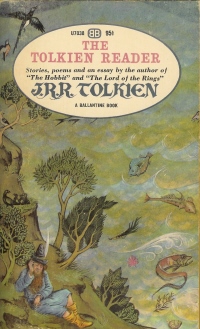
http://upload.wikimedia.org/wikipedia/en/c/c0/Tolkien_reader.jpg

Everybody has heard of The Lord of the Rings and The Hobbit, and most people have probably read them. Many people have also read The Silmarillion, which is less popular and slightly more difficult to read (though it's really not that bad and well worth it). Then there are Tolkien's other Middle-Earth related writings, published posthumously by his son and not as well known as The Lord of the Rings and The Silmarillion. Included in this group is The Children of Hurin, Unfinished Tales, and the extensive History of Middle-Earth series. The first of these is a longer retelling of one of the most tragic stories in The Silmarillion, the second a collection of somewhat miscellaneous writings by Tolkein that pertain to the Four Ages of Middle-Earth. The History of Middle-Earth is a series of books put together by Christopher Tolkien that chronicle the development of Middle-Earth and the larger world of The Silmarillion in Tolkien's writings.

But often overlooked are Tolkien's other writings that do not pertain directly to the world of Middle-Earth and The Silmarillion. These works are barely ever mentioned in conversations between fans of Tolkien, and many people (myself included until a few years ago) do not even know that these other books exist. But those who do know that they have found a treasure. These other works I speak of comprise short stories, poems, essays, and other miscellanea. By turns surprising, ponderous, funny, brilliant and beautiful, these are works that every Tolkien fan should read - and probably some other people who aren't Tolkien fans should read them, too. Here's the list:

1. The Tolkien Reader
2. Smith of Wooton Major
3. Letters from Father Christmas
4. Mythopoeia
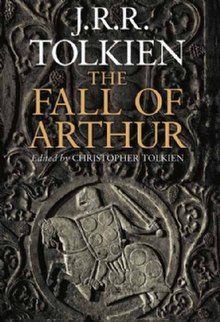
5. The Fall of Arthur

Caution: This review may contain one or two brief rants, diverse literary references, and general reveling in the supreme awesomeness of Tolkien.


The Tolkien Reader


What Goodreads has to say:


An invitation to Tolkien's world. This rich treasury includes Tolkien's most beloved short fiction plus his essay on fantasy. 

[What? That's it?]
 

What I have to say:


First on my list is The Tolkien Reader. This little volume published during Tolkien's lifetime contains a short dialogue play, Tolkien's monumental essay "On Fairy-Stories," the only allegory he ever wrote, a short story, and several surprisingly wonderful and wonderfully surprising poems. The Tolkien Reader, more than anything else on this list, is the single Tolkien book apart from The Lord of the Rings and The Hobbit that I would urge every Tolkien fan to read. And the good news is that, because of its relative obscurity, you can usually buy the book for pretty cheap. I found it for $1.00 at a book-sale, picked it up, bought it, read it, and found that it changed me forever.

Let me tell you what is in this book. First there's an essay by Peter S. Beagle, which is kind of cool, if only because I love Peter Beagle (author of The Last Unicorn). But after this we get into the Tolkien part, and all of that just leaves Beagle's essay in the dust.

The first piece by Tolkien is "The Homecoming of Beorhtnoth, Beorhthelm's Son," which is a short play in the form of a dialogue between two characters. The scene takes place just after the famous Battle of Maldon, fought in the year 991 in England. This battle is the subject of an old Anglo-Saxon poem, now partly lost. Tolkien's dialogue picks up where the Anglo-Saxon poem ends: the battle is over, the invading Vikings have utterly defeated the Anglo-Saxon army, and two Anglo-Saxon men have been sent to the battlefield to find their leader's body and bring it back for burial. The play is at once like and unlike Tolkien's more familiar works. The younger of the two characters is a poet, and waxes poetic in the Epic Anglo-Saxon tradition, but the older man questions the poetry which glorifies the actions of heroes and omits the story of the common people. "The Homecoming of Beorhtnoth, Beorhthelm's Son" reminds me of some Early Modernist Irish plays I've read, and is vaguely reminiscent of the style of playwrights like Samuel Beckett and Tom Stoppard. Thus it is rather surprising coming from Tolkien, and yet it is also clear that no one but Tolkien could have written it.

Next in The Tolkien Reader comes Tolkien's monumental essay "On Fairy Stories," which I frequently wish that everyone had read, because it would be so much easier when I want to reference it, and, believe me, that happens a lot. This essay is probably the best argument I've ever heard for fantasy literature (though C. S. Lewis also wrote some very eloquent and convincing defenses of fantasy literature, especially for children - see On Stories and Other Essays on Literature). This essay also introduces the word "eucatastrophe" coined by Tolkien himself, which again I wish that everyone knew, because it would be SO helpful if I could reference it in discussions and papers. It's a very useful word to know, and it's also AWESOME. I'll just tell you what it means now. "Eucatastrophe" is a wonderful catastrophe, like the kind that occurs at the end of fairy tales; when everything looks darkest and it seems as if all hope is lost, something happens to reverse the situation. A good example is the end of Sleeping Beauty, when the prince kisses the princess and wakes her up. If you still don't understand what the word means, just think: "The Eagles are coming! The Eagles are coming!" and you'll probably get it. Of course, Tolkien explains it much better than I can, so read the essay. It is a little long, but extremely interesting and enlightening. It opens up your eyes to look at fairy tales and fantasy literature in a whole new way, and it also gives several arguments for the value of fantasy literature, which you can use against people who tell you that reading fantasy novels is a waste of time.

And now we come to my very favorite part of The Tolkien Reader (probably with the exception of the poems at the end): "Leaf By Niggle." This is the only allegory Tolkien ever wrote, and no, The Lord of the Rings is NOT an allegory, nor are The Chronicles of Narnia (though obviously Tolkien didn't write those). An allegory is a story in which every character and event represents something larger. Probably the most famous allegory is The Pilgrim's Progress. Allegories were very popular in Medieval England, especially as plays; there was usually one character named "Everyman" who represented the common man, as well as characters symbolizing things like virtue, sin, pride, honesty, etc. The Narnia books are not allegorical because, while many of the characters suggest things beyond themselves, they don't all represent something specific - they are characters in their own right. Also, Aslan does not symbolize Christ, he is Christ. Thus, people who say that The Lord of the Rings or The Chronicles of Narnia are allegorical usually don't know what they're talking about. And so "Leaf By Niggle" is Tolkien's only allegory. And, wow, is it amazing.

This piece tells the story of Niggle, a painter who knows he has to go on a journey someday, but keeps putting it off. He spends endless amounts of time working on his "masterpiece" a painting of a tree with many leaves, and often neglects or at least resents doing other "more important" things. But eventually a man arrives to take him on his journey, and he has to leave his painting and everything else behind. (What do you think the journey represents?) I'll stop the summary here and let you read the story for yourself; it's not very long. Once again, the story is startlingly different from all of Tolkien's other writings, yet also uniquely Tolkienesque. The story functions on multiple levels, including allegory and autobiography: Niggle resembles Tolkien himself in many ways (Tolkien was notorious for working forever on projects and frequently not finishing them). Yet in many ways "Leaf By Niggle" feels almost more like something written by Tolkien's friend C.S. Lewis, especially The Great Divorce. Read it once, figure out what everything in the story represents, and then maybe read it again. Like "On Fairy Stories," "Leaf By Niggle" changed the way I look at and think about art in all of its forms, and especially changed how I see the role of the artist himself.

"Farmer Giles of Ham," a longish short story about a country farmer who encounters a dragon, is the next work in the reader. While not as deep or meaningful as the previous works in the collection, this story is a lot of fun, and is very obviously written by Tolkien. It shares some similarities with The Hobbit, and in fact might be described as a very compressed, lighter version of The Hobbit. But of course it's not exactly the same; it's an original and enjoyable story in its own right. Read it and try to figure out what a blunderbuss is (and please let me know what it is when you find out).

The final pages of The Tolkien Reader contain a collection of poems written by Tolkien, entitled, "The Adventures of Tom Bombadil and Other Verses from the Red Book" so it's hobbit poetry!! How exciting is that?? Anyway, the collection starts off with two poems about Tom Bombadil, for all the Bombadil fans out there (you know who you are), then launches into a series of diverse and wonderful poems. There's one that's super creepy, another about a mariner that's super fun and, I think, the source of the name "Dumbledore." Then there are some that are just lighthearted playing around: there's one about a cat dreaming about his ancestors, another about an oliphaunt (probably written by a certain hobbit that you know well), one about a shadow-bride, and another with a troll in it. But my favorite are the last two. "The Sea-Bell" (also known in the Red Book as "Frodo's Dream") is my very favorite. I read it over and over again. It is so beautiful and so desolate. The first time I read it, I was rather startled - once again it was so unlike anything and everything else I'd ever read by Tolkien. It almost seemed more like something T.S. Eliot might have written, especially considering certain passages in "The Love Song of J. Alfred Prufrock." And, when I read this poem, I realize how great of a poet Tolkien was. "The Sea-Bell" both soothes and stirs, setting something deep within me into motion.

The final poem tells of the meeting of a mortal princess with one of the last boats of elves headed for the Undying Lands. It is lovely, lyrical, and faintly sorrowful in the way that much of Tolkien's writing is. This piece was clearly written by the author of The Lord of the Rings.

Hey, are you still here? Well, since it took me that long to get through only The Tolkien Reader, I think I'll save the other works on my list for another time. And don't worry, they won't take as long as this one did. In the meantime, the good news it that I've already reviewed The Fall of Arthur! I will get through every work on this list someday - but it is not this day.