Showing posts with label Dragons. Show all posts

Thursday, February 21, 2019

Third Time's a Charm: Jeffrey Bardwell's Rotten Magic

Title: Rotten Magic
Series: The Artifice Mage Saga (#1)
Author: Jeffrey Bardwell
Genre: Fantasy / Steampunk 
Publisher: Twigboat Press
Pages: 336

What Goodreads has to say:

Destiny in one hand. Doom in the other. Which will destroy him first? 

Artificers are the gilded princes of the Iron Empire. Mages are violent criminal outcasts. Devin competes to become the best artificer in the empire . . . but he's secretly a mage. 

Devin, a young skilled apprentice, dreams of becoming the master of his craft if he can only resist the sinuous allure of magic. His secret grows heavier as he claws his way to the top of his competitive, cutthroat guild. Friends and rivals start taking notice when Devin glorifies in the persona of the dragon and builds mechanical armor to match. He's also started hearing voices in his head: the stout words of the being he calls 'the artificer' and the sly, oily voice of 'the mage.' How long can Devin be satisfied with fake dragon armor when the promise of true arcane power whispers in his ear? 

Embark on Devin's dark, epic journey in Book One of The Artifice Mage Saga. Join the fantasy steampunk brawl of metal vs. magic where sorcery is bloody, science is greasy, and nobody's hands are clean.

What I have to say:

I don't usually talk about my own writing on here, but I'm gong to make a brief exception right now.

It took me a few years to realize how my writing process works. It's like this:

1. Write a book.
2. Read through it and make a few edits.
3. Decide it's probably the next great American novel.
4. Wait several months.
5. Read it again.
6. Realize it needs a complete rewrite.

As such, it's easy for me to understand why author Jeffrey Bardwell has rewritten Rotten Magic twice (well, at least twice, as far as I know).

I'm also happy to say that this third (and, as he tells me, final) incarnation of Devin's story is not only the best yet, but a more complete, satisfying story than either of the previous two versions.

First of all, I LOVE LOVE LOVE that the story starts in Devin's village before he gets accepted into the Artificer's Guild. He's still a poor, innocent country boy with stars in his eyes. Reading the first few chapters of the story, I just kept thinking, "Yes! Yes! Yes! This is where Devin's story starts."'

It's soooo much more interesting and satisfying to start here when he's an ignorant young bumpkin who wants nothing more than to study at the Artificer's Guild. He's never seen the Iron City: he has no idea what he's in store for, or what the Artificer's Guild is really like.

It gives the tragedy that follows (in this book and the sequels) so much more weight. And it makes Devin's character arc so much more compelling.

I equally loved getting to see Devin's first encounter with Drusilla, Benny, and all the other students. The first two Rotten Magics started with Devin already in his last year of apprenticeship--at which point he'd been living in the Iron City for a few years and was already enmeshed in the tangled web of the Artificer's Guild, with Benny as his nemesis and Drusilla as his best friend.

In those other two drafts, I never realized what I was missing. It's so fun to see these relationships take shape. It's so fascinating to see Devin transform from his first to final year as an Artificer.

For anyone who hasn't had the benefit of seeing this story slowly take shape (and it's been so interesting to see), I'll stop talking about the changes and just dive into the story itself.

Magic. Steampunk. Characters so complex you cheer for them one moment and cringe for them the next. You love them, hate what they're doing, and find the whole thing so utterly fascinating you can't look away from the impending train wreck. WHAT'S NOT TO LOVE HERE? THIS IS EVERYTHING I WANT IN A BOOK.

Devin is such a fascinating character, and perhaps equally fascinating is Drusilla. Though I'm still perplexed by her actions in the final chapter (how does she think turning Devin over to the Black Guards is going to free him?), I so love Drusilla's character and her inner monologues:

And of course you're only doing this for Devin's sake, I told myself. Because his behavior has grown so bizarre, his inventions so dangerous. Not from any sense of jealousy? Not because never in your craziest dreams could you have imagined such an awesome flame-throwing device? And you, the lamper's daughter, no less!

As for Devin himself, he's your ultimate troubled hero. I love the boy to death and want nothing more than for him to succeed. But from the moment he first kindles a fire from his fingertips--not even a fire, really, just a faint, fleeting warmth--you know where this is all headed.

Oh, did I mention? Magic is forbidden in the Iron Empire. Devin's not only a crazy brilliant artificer--he's secretly a mage.

Also, he's unstable as heck. Is it something to do with the magic? Does magic make a person unstable? Dangerous? Is Devin really--like the mages on all those propaganda posters--a monster?

I love it, I'm here for all of it--even the train wreck at the end.

And writing this, the spirit of my former English major (writing her senior thesis on Frankenstein adaptations) just resurfaced. Because what screams Frankenstein's monster like a troubled boy--cast out by his fellows and denied fellowship until he's desperate--igniting a room full of innocent bystanders (well, admittedly, they are Black Guards who are probably going to arrest him, but still....)?

Whenever the Artificer's Guild students play Knights and Dragons--a bit like Capture the Flag, but the Flag is the Dragon and once you find him, well let's just say it's a bit more violent than Capture the Flag--Devin is ALWAYS the Dragon. Dragon Boy. That's his nickname. Why not just call him a monster and have done with it?

But somehow, like Frankenstein's monster, Devin may be the least monstrous of them all. He's so innocent. And yet--he's anything but innocent. It's complex, it's fascinating, it's beautiful. It's Rotten Magic 3.0.

This is where I break into applause.

Rating:


(Y'all saw that coming, right?)


Until tomorrow.


P.S. -- Now you all know how to bribe me into giving a great review. Just write a book with Frankenstein parallels.

Thursday, July 19, 2018

Revolution, Empire, and Dragons: Review of Jeffrey Bardwell's 'Hidden Revolt'

36684996

Title: Hidden Revolt
Series: The Artifice Mage Saga (#3)
Author: Jeffrey Bardwell
Genre: Fantasy / Steampunk / YA 
Pages: 346
Publisher: Twigboat Press

What Goodreads has to say:

Would you lead a revolution for psychotic criminal mages? 

The Iron Empire is ripe for revolt. The guilds are repressive, the price of dragon rum and steaks are soaring. The mage menace spreads unchecked. Resentment builds. One day a young hero struts into the capital . . . and vows to smash the imperial palace with dragon power. 

Devin, more artifice than mage with his mechanical foot, returns to the empire, his nemesis Captain Vice in hot pursuit. The firebrand mage stirs the passions of imperial citizens under the guise of dragon conservation. Are they not all like slabs of dragon flesh: once powerful and mighty, but the empire bleeds them until nothing remains but bones and ruptured organs? The message resonates. A rebellion is born in secrecy and treachery. Beneath their cloaks of lies and shifting alliances, mages, gentry, and commoners alike reach for the mantle of the shattered dragon while Captain Vice's iron fist slowly closes around them. 

Rise up and smash the state in Book Three of The Artifice Mage Saga. Join the fantasy steampunk brawl of metal vs. magic where sorcery is bloody, science is greasy, and nobody's hands are clean.

What I have to say:

In answer to that first question: Honestly I'd lead a revolution for just about anybody, I'm just looking for an excuse to revolt.

Now that we've gotten that out of the way, let's take a look at the most epic Author's Note in the history of books I've read. Here's how it ends:
"So [Hidden Revolt] isn't really Les Mis with dragons. All right, no more dissembling: it's totally Les Mis with dragons (if early nineteenth century Paris was the capital of an evil steampunk empire.) C'est la vie."
If that was a bribe, I'll take it. Your book is now getting at least a four-tree review, Jeffrey Bardwell.

So anyway, I love Les Mis. I love revolution. I love dragons. Hidden Revolt had it all.

That said, I'm not sure it beats Rotten Magic, which remains my favorite in the Artifice Mage Saga. Still, it's pretty fun.

Things get progressively darker, grittier, and more chaotic as the Artifice Mage Saga continues, definitely proving that nobody's hands are clean. (Honestly, NOBODY has clean hands in this series, except for maybe sweet little Styx, but I'm sure that's only temporary.)

Speaking of Styx -- the wooden automaton given life by Devin -- how much more awesome can you get than Frankenstein, Les Mis, steampunk, dragons, and revolution all in the same book?????

Excuse me as I try to (momentarily) stop being such a literary nerd (English majors die hard).

Let's talk about Devin, the artifice mage himself. This book is a turning point for him. K, maybe I could also have said that about the last two books, because every moment seems to be a turning point for Devin, he's just turbulent in general. But this is the book where he really seems to start growing up. He realizes some things. He learns some lessons. He starts to grow humble. (He's not entirely there yet, but we'll give him credit for making progress, at least.)

The proof comes toward the end of Hidden Revolt, when Devin faces a dragon and has a sudden moment of self-awareness: "All those other scaly beasts in the sky and yet here you are, alone. You hunt alone. You live alone. I used to be like you." In the next moment, Devin calls to his boss band of revolutionary mage ninjas (like seriously, that's kind of what they are), and together they fight the dragon. Devin's realized it doesn't pay to fight alone. Perhaps he's not quite the dragon-boy after all -- or at least, not anymore.

If I have any gripe with Hidden Revolt, it's the same one I had about the last book in the series (Broken Wizards), and it's a weakness I'm very sensitive to because it's something I struggle with as a writer of fiction. These characters talk too much. In some moments, that's fine, because part of the point is that they can't get their revolution off the ground because they just go around in circles talking. But when the characters are trying to escape from the emperor's prison, or facing a humongous fire-breathing dragon, having a leisurely conversation doesn't feel natural.

Luckily, with a little unintended help from the emperor, Devin and his friends do manage to get their revolution off the ground, and I assume the next book in the Artifice Mage series will address this thought-provoking question which Devin ponders mid-way through Hidden Revolt:

"Can people who just spent all their energy tearing something down suddenly turn around and start building?"
We'll see if Devin's dragon revolution can succeed where so many others have failed. We'll also see whether or not Armand Delacourt Vice is still alive and if so, whether or not he's eventually going to commit suicide by... I don't know... jumping off a bridge.

Meanwhile, can someone please write a straight-up version of Les Mis with dragons? It's now the story I never knew I always wanted.

Rating:


Until tomorrow.

Thursday, June 7, 2018

In which Erin questions her own sanity after reading Jeffrey Bardwell's 'Rotten Magic' rewrite


Title: Rotten Magic
Series: The Artifice Mage Saga (#1)
Author: Jeffrey Bardwell
Genre: Fantasy / Steampunk / YA 
Publisher: Twigboat Press

"It's their hidden fire we fear, that horrible force waiting to burst out. But they're not monsters. They're human beings lost in their own power." - Rotten Magic

Blurb:

Would you sacrifice your future to practice magic?

Artificers are the gilded princes of the Iron Empire. Mages are violent criminal outcasts. Devin competes to become the best artificer in the empire . . . but he's secretly a mage.

All the apprentices in the Artificer's Guild compete by building crude prototypes of powered armor for mock battles. When Devin transforms himself into a mechanical dragon to slaughter the competition, his rival Benson steps into the role of dragon slayer. But Devin's secret grows heavier as he claws his way to the top. He's started hearing eerie voices in his head: the stout words of the being he calls 'the artificer' and the oily voice of 'the mage.' How long can Devin be satisfied with fake dragon armor when the promise of true arcane power whispers in his ear?

Embark on Devin's dark epic journey in Book One of The Artifice Mage Saga. Join the fantasy steampunk brawl of metal vs. magic where sorcery is bloody, science is greasy, and nobody's hands are clean.

Me: 

If you're thinking, "Hey, wait, didn't she already review this book?" The answer is "yes and no." 

Previously on this blog, I reviewed Rotten Magic 1.0

This is Rotten Magic 2.0. 

I thought the first one was pretty perfect when I read it, so when the author (Jeffrey Bardwell) asked me if I'd like to review a "new and improved" version, I was all on board. But I was a little dubious. How could anyone improve on the fast-paced, delightfully dark story of metal and mages that was Rotten Magic 1.0? 

Regardless, I gave it a read.

I. Loved. It.

Guys, Rotten Magic 2.0 is even better than the first version!

The main story is still intact, as are the characters. There's just more of it, and of them. 

The biggest change from version 1 to 2 occurs in the character of Drusilla: Devin's best friend and fellow apprentice artificer. In version 1, she's more of a minor character. In 2, she's one of the story's two narrators (the other is Devin). 

In my opinion, Drusilla's vamped up role and voice add a lot to the story. It's cool to compare her background, personality, and attitude with Devin's, and it's nice to get a female narrator along with the male one - it brings dimension and depth. Drusilla also comes from a sympathetic background: her family is poor and her father is abusive. 

That said, I'm a little perplexed over Drusilla's actions at the end of the story. Encouraging Devin to free himself by exposing his mage powers to the Black Guards seems like a very roundabout way of helping out your best friend. That said, it's such an insane chain of reasoning that I kind of dig it. (Petition for Drusilla to return in a future book where we realize she's completely nuts.)

Even if she's not bonkers, it's conceivable that the pressures of being an artificer apprentice, together with the stressful time of year (it's evals), her troubled home life, and her frustrations over Devin's actions would drive her to think in illogical ways. So I guess what I'm trying to say is, I don't see any sane person doing what Drusilla did to Devin; but I can buy it if Drusilla herself is a little off.

Now that I think of it, she's not the only one. Devin is constantly struggling to remain in control of himself and his powers (this is another element of the book that I love and could probably write a whole nother blog post on); and the fact that he goes along with Drusilla at the end indicates that maybe the two of them are unhinged in the same way. Drusilla's father is a bit wacko; and so is Devin's nemesis, the bully Benson. Even some of the established artificers show signs of being a little off-kilter. Shoot, is anyone in this story completely sane? 

This is partly why I love Jeffrey Bardwell's books so much: his characters are flawed. When it comes to fictional characters, I'm all about the Lokis, the Lady Macbeths, the Victor Frankensteins.

Why? These characters are just so interesting to read about. It's fascinating to get inside their heads and explore their twisted logic, or to guess at what they'll do next when every move they make is so unpredictable. Devin is a Victor Frankenstein if ever there was one. So while I compared him to Ender in my previous review (albeit a warped Ender), I'm sticking with Frankenstein here. 

Here's where I mention that this book is steampunk and fantasy, and what a delightful thing it is to get a book that's cross-genre in my two favorite categories. Thank you, Jeffrey Bardwell.

Another thing I love about this book - in both its incarnations, but especially in the second one - is its pacing. While I usually avoid reading other reviews of a book until after I've written mine, I accidentally read one on Goodreads that compared reading Rotten Magic to watching a train crash in slow motion, and boy is that accurate! I know it's all going to end in tears, but I can't tear myself away!

"We are in control of this situation. The phrase echoed through Devin's mind. For so long, I've wrestled to stay in control. And for what? ...Everything still burst into flames in the end."

Why do I find a train wreck so fascinating? Is it possible I, too, am a little sadistic? A little bit... off?

This is a book review, not a psychoanalysis session, so I'll leave it at that.


Rating:


Until tomorrow.

Wednesday, March 14, 2018

Review: Broken Wizards by Jeffrey Bardwell

Title: Broken Wizards
Series: The Artifice Mage Saga, Book 2
Genre: fantasy/steampunk
Pages: 468
Publisher: Twigboat Press
Buy: Amazon


What Goodreads has to say:


Would you flee into the land of dragons and evil wizards?

The wizard purge is in full swing. Sorcery is illegal in the modern, steam-powered Iron Empire. The Magistrate's Black Guards hunt the uncivilized mages using mechanized armor and mysterious, clockwork weapons. The guards deliver their prisoners to the Butcher, Captain Vice. All wizards are tortured and executed as traitors to the state . . . with one exception.

That exception is Devin, the outbreak mage and ex artificer, a prince of machinery. The Magistrate exiles the youth over Vice's protests to the wild kingdom of wizards and dragons. Devin only knows gears and springs, but his savage magic offers salvation, if he can tame it. The exile must learn to harness his dangerous, new powers before the Butcher tracks him down to finish the job.


Follow Devin's quest in Book Two of The Artifice Mage Saga. Join the fantasy steampunk brawl of metal vs. magic where sorcery is bloody, science is greasy, and nobody's hands are clean.


What I have to say:


In Broken Wizards, author Jeffrey Bardwell continues the story of Devin the artifice mage. When last we saw Devin in Rotten Magic, he'd locked himself in a room with his arch nemesis (the school bully) and it looked like he was about to torch the place. The stakes were high, the tension was real, and boy did I love it.

Keeping that tension, Broken Wizards starts off with pretty high stakes. We're not entirely sure what Devin did in that room, nor are we sure what happened afterward. We're concerned about what may have befallen Devin's very lovable mother and sister, and we almost can't watch as the young mage's punishment is meted out.

Oh, did I mention? Being a mage is a crime in the Iron Empire. And Devin has now officially "come out of the closet" as a mage - which means there's no sanctuary for him anywhere.

Banished from the Iron Empire, he wanders through the poorer Kingdom of Corel: a place where mages and dragons roam at large, though Devin seems to have a hard time finding either at first. Eventually he reaches Cornelius, a mage who agrees to help Devin harness his magic powers.

So yeah, this is that one book that every fantasy series has at one point, where the main character goes on a quest of self-discovery and basically the whole book is like, hero wandering from one town to the next, talking to a lot of people, learning about his/her parentage or learning to tame his/her powers. At best, it's Taran Wanderer, The Empire Strikes Back, etc. At worst, it's The Druid of Shannara (Man, I love Shannara but I hated that book. It just dragged on and on forever!)

I'm pleased to report Broken Wizards is much more engaging than The Druid of Shannara. It's not Taran Wanderer, but then what is?

Like I said, this book started out strong. And it stayed strong for a while. There were also parts where Devin and Cornelius just rehashed old arguments over and over again, and those weren't the most engaging passages, I must say. Don't get me wrong: I love a little magical philosophy in my books, but I felt like these characters could have used less talking and more doing. However, maybe that's their fatal flaw.

At other moments, the story is boss. Some of my favorite parts were when we left Devin's story for a while and saw through the eyes of other characters. Devin's point of view is muddled and meandering: which isn't exactly a fault in the narrative, that's just Devin's character and I'm all about those unreliable narrators. But because of that, transitioning to another character feels refreshing. I loved the passages from the magistrate's point of view, and I love that the book started out that way. It was different and it gave us some more context on the Iron Empire and its mage dilemma.

Also - Styx!

By far my favorite narrative voice was that of Styx - and I won't actually tell you who Styx is because it could be a spoiler, but he's a character, OK? The first time we got a passage from Styx's point of view, it was like a breath of fresh air in the story - so emotional, so poetic, I loved it. I also loved how the passages from Styx kept alluding to things that were going to happen in the future, teasing us with hints of prophecy and war - and then never explaining them! (I assume we'll get it in a subsequent book.) It was a brilliant way of keeping the reader engaged and guessing.

And did I mention how great Abigail is? Though it took a little time for me to warm up to her (as it should, she's kind of intimidating), I really liked her in the end. I don't think we ever got anything directly from her perspective, but she was a strong supportive character.

So there might be a lot of talking, but there are also parts in this book that are spine-tinglingly awesome.

Devin has a moment of revelation at the end of the book, when he realizes something about the dynamic between Cornelius and himself (I won't spoil it). I loved that part.

Also, Devin has some great one-liners, like this one that I don't think is a spoiler because I'm not giving any context and honestly Devin says this kind of stuff all the time anyway:
"None of your men will leave this beach alive," Devin said. "You only thought you faced a dragon before. I am the real dragon."
Boom. Devin has arrived.

It just takes, like, a lot of pages. (IDK how many, I read this on Kindle, OK?)

Final takeaway: I could do with less talking - especially when characters are in the middle of a life or death situation and they're like, o...k... time for a philosophic debate.... but overall this book has great characterizations, great alternating viewpoints, and freaking dragons. Plus some steampunk mixed with magic, which I dig. (Send me more steampunk books, yo!)

If it's a little broken, maybe that's because it's like its hero (anti-hero? both?): artifice mage (and occasional metaphorical dragon) Devin.

Rating:

(Honestly I'd probably give it 3.5 but you can't have half a tree.)


Until tomorrow.

Wednesday, August 9, 2017

Rotten Magic by Jeffrey Bardwell


Title: Rotten Magic
Series: The Artifice Mage Saga (prequel)
Author: Jeffrey Bardwell
Genre: Fantasy / Steampunk / YA
Number of pages: 122
Publisher: Twigboat Press


What Goodreads has to say:

Devin will do anything to win. Even resort to magic!

Devin competes to become the best artificer in the mage phobic Iron Empire. Who needs magic when you can master the art of machinery? The other apprentices envy his genius and skills . . . especially Benson. Every apprentice hones their craft building and fighting in crude prototypes of powered armor. Some add frills, others barbs or horns. When Devin transforms himself into a mechanical dragon to slaughter the competition, Benson steps into the role of dragon slayer.

But Devin harbors a secret as he claws his way to the top of the Artificer's Guild: he's a mage. These new abilities are thrilling and frightening, and the voices more so. How long can Devin be content wearing a steel dragon mask when the seductive promise of true arcane power whispers in his ear?

Experience the novella prequel to the Artifice Mage Saga: a fantasy steampunk brawl of metal vs. magic where sorcery is bloody, science is greasy, and nobody's hands are clean.

What I have to say:

If you're looking for a book that reads like a steampunk version of Ender's Game with magic and an element of dragons - look no further. You're currently reading a review of that book. A slim novella packed with punches, Jeffrey Bardwell's Rotten Magic starts off the Artifice Mage Saga with a bang (several, in fact). Setting and characters are intriguing, relationships are complex, ambition is powerful, and magic is dangerous. 

Devin is an intriguing character because he doesn't fit nicely into the young underdog genius mold. At first, he seems to: a young, intelligent apprentice working on a secret project, regularly taking the brunt from the school bullies. 

But as things go on, we realize that's not Devin at all. He is intelligent, but his secret project isn't all that original, and he can't even seem to get it to work when he tries to present it at his examination.

He does often take the brunt from the school bullies, but that's only because he seems to enjoy fighting and has accepted the rule that the dragon always loses. And he prefers to play as the dragon. Far from just an innocent young victim, Devin longs for retribution and it looks like he's going to get it. He can be savage when crossed, and even his family and friends aren't always safe. 

Rather than some young genius who's probably going to save the world with his invention, Devin is a frustrated apprentice who has big ideas that never seem to get off the ground, and he may very well end up destroying the world, rather than saving it. That makes him less of an idealized fantasy hero and more of a, well, human. But one with a dark side that makes him all the more compelling.

Devin's nemesis, Benson, doesn't fit the common character mold either. He's a bully - but as Devin points out, he's not just your average bully with no brain but plenty of brawn. Benson is intelligent as well, and that's mainly why Devin is having such a hard time taking him down.

But back to Devin himself. He becomes even more intriguing as a character when we hear the voices inside his head (yes, everyone has those voices, but Devin's seem to be more vocal than most of ours are). In Devin's thoughts, the voice of the artificer and the voice of the mage are always in conflict. Like the gas lamp he accidentally blows up in his room, Devin is poised to explode at any moment, and when he does, the consequences will be dire. (But you might just have to read the next book to find out how dire.)

Told in an engaging style with suspense, wry humor, and a strong undercurrent of magic, Rotten Magic is a thrilling roller coaster of a ride up to the top - where I expect we can catch the next book and set off on an even more thrilling journey. Bring it on!

Rating:


Until tomorrow.

Wednesday, March 8, 2017

Just add dragons: Dragon's Future by Kandi J. Wyatt


Title: Dragon's Future (Dragon Courage # 1)
Author: Kandi J. Wyatt
Publication Date: August 10 2015
Publishing Company: Booktrope/Updrift
Number of Pages: 262
Buy: Amazon

What Goodreads has to say:

Every child of Woolpren dreams of becoming one, but only a few are chosen. Now, ten-year-old twin brother and sister, Ruskya and Duskya, have been selected to join an elite group of riders: dragon riders. Full of awe and excitement, the twins leave their mother, and their home, to train for their new lives.

Fifteen years later, dragons are becoming extinct and riders are rare. One day, Ruskya is at the general store in town when a man announces that he is recruiting new dragon riders. Ruskya goes undercover, and discovers that there is another colony of riders with their own agenda—a quest to find a mysterious plant that could restore the dragon population, or destroy it. When a battle erupts between the two colonies, it’s up to Ruskya and his friends to fight for their dragons’ future, and their lives.

Follow Ruskya’s quest as he finds courage and friendship in this exciting middle grade fantasy series by new author Kandi J Wyatt.

What I have to say:

Dragon's Future is a fun little story about family, friendship, courage, and, of course, dragons.

Because adding dragons to any story automatically makes it that much more awesome.

Also, kudos to whoever is responsible for that cover, because it's gorgeous.

This book made me think of a quote often attributed to G. K. Chesterton:

"Fairy tales are more than true – not because they tell us dragons exist, but because they tell us dragons can be beaten."

Which leads me on to a similar C. S. Lewis quote: 


"Since it is so likely that children will meet cruel enemies, let them at least have heard of brave knights and heroic courage. Otherwise you are making their destiny not brighter but darker."

As I reflect back on Dragon's Future, I find that this is my main takeaway from the book. To paraphrase the two quotes above, great stories - and specifically great fantasy stories - arm children with the courage they need to face their own "dragons." This is one of the many reasons that fantasy stories are useful and essential to society, but lest I get carried away on this topic, I'll return to Dragon's Future.

Dragons can in fact be beaten, and that's something Wyatt's story illustrates very well. But the story also teaches that not all dragons need beating. Some dragons are, in fact, quite adorable.

As Ruskya and his friends form lasting friendships with dragons, they are given power and courage to face their worst fears. Of course, their friends help as well. As Ruskya rides off to battle his nemesis (that's all I'll say, as I don't want to give any spoilers), he knows he couldn't pull it off without the help of his friends and his dragon. And I think that teaches us something important as well.

Wyatt's characters are charming and likeable throughout; I was especially taken with Carryl, the brave healer with an impenetrable strength.

Dragon's Future propels its reader into a world of dragons, farmers, and townsfolk. I loved the feel created by the names of characters and places, and the details we got about the setting and environment. Names like "Woolpren," "Duskya," and "Wyeth" just give me a kind of warm, honey feeling. But maybe that's just me.

While it was a fun story with likeable characters and an imaginative setting, though, there were a few things that kept me from really immersing myself in this book.

For one thing, I couldn't get behind the writing style. While there were moments of great storytelling, in general I felt like the voice left something to be desired. I think the author could really have improved the story by showing more instead of telling.

On a related note, the story didn't draw me in as much as I would have liked. The first chapter was fun, as two young twins attend a ceremony to find out if any of the dragons will choose them as riders. But after that, the plot kind of got stuck for a bit. Maybe it's because learning to communicate mentally - while an awesome ability - is not all that exciting to read about. And while the characters are all likeable, and some are interesting, I felt like most of them had more potential for growth, which would have made the story a little more engaging.

That being said, I am not a Middle Grade reader, and maybe readers closer in age to the intended audience (roughly 8 to 12, I think) will enjoy this story more than I did.

After all, it does have dragons in it.

Rating (out of 5) :


Until tomorrow.

Wednesday, January 4, 2017

Music and the Tree Who Loved Her


Title: Music and the Tree Who Loved Her 
Author: J. A. Bennett

Publication Date: 2016
Number of Pages: 398


What Goodreads has to say:

Green was a seedling as proud as any conqueror … so begins the magnificent tale of the indomitable spirit of one tree, who after losing everything, finds himself in the middle of a deep, intricate and wondrous adventure ...

Prince Green is a Prince of the Forest no longer. Living alone on the prairie, ignored and shunned by his own kind, he finds comfort in the gossip of the savanna grasses, and company in the stars at night.

He doesn’t realize that the ache under his bark comes from loneliness until he saves his mortal enemy’s child -- A newborn dragon maiden -- whose sweet kisses have the power to rebuild a shattered world, or destroy it.

What I have to say:

Music and the Tree Who Loved Her is a fantasy on an epic scale. Somehow, J. A. Bennett manages to weave together at least six vastly different cultures in a way that never feels jarring. The transitions from one race to another are seamless and never take the reader out of the story. 

Basically, this book has it all:

Talking, walking (yes, walking) trees
Shape-shifting dragons
Steampunk-esque gnomes
Creepy vampires
War-loving earth-dwellers 
Undead stuff
Merpeople
A sentient Mountain
(To name but a few)

Reminiscent of Norse Mythology, vampire legends, and epic fantasies like Lord of the Rings, Narnia, and EarthseaMusic and the Tree Who Loved Her concerns the coming together of a host of different races who have long been enemies, as they attempt to rebuild a post-apocalyptic world and combat an evil force bent on banishing all creation to the non-existence.

This story has some truly great characters. I especially liked Tongs Chin, a gutsy little gnome who has a talent for machinery and is not going to let anyone tell her how to live her life. Prince Green, the Tree of the title, is also a fascinating character. Some of the best-written passages in the book concern Green and how he views the world around him.

In fact, there is some really good writing in this book. Especially original are the descriptions of Mythic, the traveling Mountain trying to save civilization despite the fact that everyone (and everything) seems to be working against him. Since sentient, walking mountains don't usually figure in stories, I found Bennett's treatment of Mythic clever, fresh, and fun. 

And that goes for much of the story: in general, Music and the Tree Who Loved Her is clever, fun, creepy, and bravely original. There's some great humor - such as when the Stonecaste go off to war in unnecessarily fluorescent tanks painted by their gnome assistants - but there's also enough danger and creep factors to keep the reader truly invested in the story. 

Overall, this book was a really fun read, and at times the writing was startlingly good. But I'd feel remiss if I didn't point out just two things I wasn't crazy about. 

First of all, squeamish readers probably won't enjoy this book: there's a lot of blood and a lot of people puking. While I don't consider myself a particularly squeamish reader, and would never judge a book's quality by how much gore is in it, I did feel that this book had a little more blood than it needed - sometimes the violence felt self-gratifying. 

Secondly, this book could have used more proofreading: it had grammatical errors and some passages that would have benefited from greater revision. If the writing had been better all around and there had been fewer grammatical errors, I would have given this book a higher rating.

As it is, though, Music and the Tree Who Loved Her is a fresh, exciting adventure with a host of wildly different characters and an epic sweep. Told with an equal amount of humor, intensity, spunk, and imagination, this story will delight fans of epic fantasy searching for an adventure that feels both new and familiar.

Rating:


Until tomorrow.

Wednesday, December 21, 2016

Beastly Bones by William Ritter

Hey everyone, before we get started, make sure you check out the 2017 2nd Annual Authors Talk About It Book Award Contest. If you're a new or aspiring author, this is a great opportunity for promotion and critique. And your book doesn't even have to be published yet to be accepted: you can submit published and unpublished books, manuscripts, and ebooks in a variety of genres. If you decide to enter, let us know how it turns out! (May the odds be ever in your favor.) And now onto today's review....


Title: Beastly Bones (Jackaby #2)
Author: William Ritter
Publisher: Algonquin Young Readers
Publication Date: 22 September 2015
Number of Pages: 295


What Goodreads has to say:

I've found very little about private detective R. F. Jackaby to be standard in the time I've known him. Working as his assistant tends to call for a somewhat flexible relationship with reality . . .

In 1892, New Fiddleham, New England, things are never quite what they seem, especially when Abigail Rook and her eccentric employer, R. F. Jackaby, are called upon to investigate the supernatural. First, members of a particularly vicious species of shape-shifters disguise themselves as a litter of kittens. A day later, their owner is found murdered, with a single mysterious puncture wound to her neck. Then, in nearby Gad's Valley, dinosaur bones from a recent dig go missing, and an unidentifiable beast attacks animals and people, leaving their mangled bodies behind. Policeman Charlie Cane, exiled from New Fiddleham to the valley, calls on Abigail for help, and soon Abigail and Jackaby are on the hunt for a thief, a monster, and a murderer.


What I have to say:

Really, I'd just like to say: thank you, William Ritter. 

It's like you wrote this book with me in mind - it has everything I love in it:

New England, for starters: 1890s New England - quaint, Romantic, and slightly creepy at night. 

A very complicated ghost.

A young feminist with a sharp mind and a thirst for adventure.

An odd detective/scientist with an eye for the supernatural.

A shapeshifter.

The dinosaur skeleton find of the century.

And dragons.

Not to mention warring paleontologists, a burly trapper with a love for magical creatures (think Hagrid), a spunky female journalist, and plenty of unexplained phenomena. 

But mainly dinosaurs.

I zipped through this book, completely captivated from Chapter One to the last page. Not only is it atmospheric, entertaining, and suspenseful; it's also beautiful. 

Several months ago, I attended a William Ritter book-signing and heard him read several passages from Beastly Bones out loud to his audience. Incidentally, he has the best reading voice and I would totally buy an audiobook of him reading the Jackaby books. Among the excerpts he read at that book-signing, the most striking in my mind was the following, which comes when Abigail Rook, the story's protagonist, finds herself conflicted by her desire to be a successful investigator, and her growing love for a young policeman (the shapeshifter mentioned above). She's received two opposing strains of advice from two different parties, and now feels like she can't take a definite step in either direction. With a great deal of awkwardness, she asks her employer, Detective Jackaby, for advice:

"So often," Jackaby said. "people think that when we arrive at a crossroads, we can choose only one path, but- as I have often and articulately postulated- people are stupid. We're not walking the path. We are the path. We are all of the roads and all of the intersections. Of course you can choose both."
 I blinked. 
"Also, if I hear any more nonsense about your allowing other people to decide where you're going in your own life, I will seriously reconsider your employment. You were hired for your mind, Miss Rook. I won't have an assistant incapable of thinking for herself." 
"Yes, sir," I said. "Thank you, sir."

Another thing I love is humor; and William Ritter has the best sense of humor. This book is hilarious:

The entry [Jackaby pointed to] briefly explained that an unidentified miscreant had broken into a shoemaker's shop three times in the past week.
 "Please tell me you're kidding, sir. It says the cobbler couldn't even find anything stolen. That's annoying, but it's not a case." 
"...Do you know who else is known for slipping into shoemakers' shops and not taking anything?"
"Please, sir. Don't say elves."
"Elves!"

Beastly Bones is also romantic:

"I'm going to kiss you now," I said. "That's going to happen." [This is my favorite line.]

 And intense:

"He wrenched me off my feet, and the world spun for a moment as the two of us tumbled into Lamb's trench. My axe bounced out of my hands, and the cold earth and smell of loose soil filled my senses for several seconds as Jackaby pressed me into the dirt. From above us came a rumbling, belching noise, and then a muffled hacking cough. Jackaby's hold on my back lightened as he rose to peer over the edge of the deep furrow. I slid up tentatively to join him."

Recommended for fans of Sherlock Holmes, Dr. Who, Buffy the Vampire Slayer, Grimm, and Harry Potter (if that doesn't cover you, I'm not really sure what you're doing on this blog, but hey, don't leave), Beastly Bones is a fantastical adventure that you won't soon forget. Also dinosaurs.

A word to those of you who aren't familiar with this series yet: Beastly Bones is the second novel in William Ritter's Jackaby trilogy (currently a trilogy, anyway). The first book is Jackaby; if you haven't read it, you're in for a treat. While I think you could get off OK reading Beastly Bones without having read Jackaby, I definitely recommend reading the books in order. Recently, Ritter has released the third book in the Jackaby series: Ghostly Echoes. Here's to hoping it will be as awesome as the first two - though I have no doubt it will be.

 
I freaking love these covers.


Until tomorrow.

Wednesday, May 14, 2014

5 works by Tolkien you may not have known existed, but which may just change your life

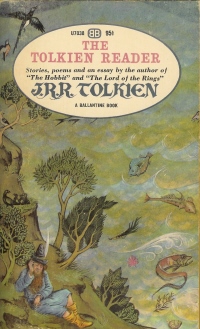
http://upload.wikimedia.org/wikipedia/en/c/c0/Tolkien_reader.jpg

Everybody has heard of The Lord of the Rings and The Hobbit, and most people have probably read them. Many people have also read The Silmarillion, which is less popular and slightly more difficult to read (though it's really not that bad and well worth it). Then there are Tolkien's other Middle-Earth related writings, published posthumously by his son and not as well known as The Lord of the Rings and The Silmarillion. Included in this group is The Children of Hurin, Unfinished Tales, and the extensive History of Middle-Earth series. The first of these is a longer retelling of one of the most tragic stories in The Silmarillion, the second a collection of somewhat miscellaneous writings by Tolkein that pertain to the Four Ages of Middle-Earth. The History of Middle-Earth is a series of books put together by Christopher Tolkien that chronicle the development of Middle-Earth and the larger world of The Silmarillion in Tolkien's writings.

But often overlooked are Tolkien's other writings that do not pertain directly to the world of Middle-Earth and The Silmarillion. These works are barely ever mentioned in conversations between fans of Tolkien, and many people (myself included until a few years ago) do not even know that these other books exist. But those who do know that they have found a treasure. These other works I speak of comprise short stories, poems, essays, and other miscellanea. By turns surprising, ponderous, funny, brilliant and beautiful, these are works that every Tolkien fan should read - and probably some other people who aren't Tolkien fans should read them, too. Here's the list:

1. The Tolkien Reader
2. Smith of Wooton Major
3. Letters from Father Christmas
4. Mythopoeia
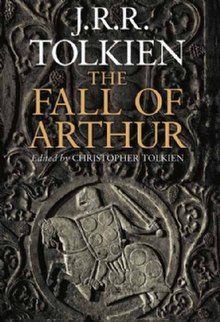
5. The Fall of Arthur

Caution: This review may contain one or two brief rants, diverse literary references, and general reveling in the supreme awesomeness of Tolkien.


The Tolkien Reader


What Goodreads has to say:


An invitation to Tolkien's world. This rich treasury includes Tolkien's most beloved short fiction plus his essay on fantasy. 

[What? That's it?]
 

What I have to say:


First on my list is The Tolkien Reader. This little volume published during Tolkien's lifetime contains a short dialogue play, Tolkien's monumental essay "On Fairy-Stories," the only allegory he ever wrote, a short story, and several surprisingly wonderful and wonderfully surprising poems. The Tolkien Reader, more than anything else on this list, is the single Tolkien book apart from The Lord of the Rings and The Hobbit that I would urge every Tolkien fan to read. And the good news is that, because of its relative obscurity, you can usually buy the book for pretty cheap. I found it for $1.00 at a book-sale, picked it up, bought it, read it, and found that it changed me forever.

Let me tell you what is in this book. First there's an essay by Peter S. Beagle, which is kind of cool, if only because I love Peter Beagle (author of The Last Unicorn). But after this we get into the Tolkien part, and all of that just leaves Beagle's essay in the dust.

The first piece by Tolkien is "The Homecoming of Beorhtnoth, Beorhthelm's Son," which is a short play in the form of a dialogue between two characters. The scene takes place just after the famous Battle of Maldon, fought in the year 991 in England. This battle is the subject of an old Anglo-Saxon poem, now partly lost. Tolkien's dialogue picks up where the Anglo-Saxon poem ends: the battle is over, the invading Vikings have utterly defeated the Anglo-Saxon army, and two Anglo-Saxon men have been sent to the battlefield to find their leader's body and bring it back for burial. The play is at once like and unlike Tolkien's more familiar works. The younger of the two characters is a poet, and waxes poetic in the Epic Anglo-Saxon tradition, but the older man questions the poetry which glorifies the actions of heroes and omits the story of the common people. "The Homecoming of Beorhtnoth, Beorhthelm's Son" reminds me of some Early Modernist Irish plays I've read, and is vaguely reminiscent of the style of playwrights like Samuel Beckett and Tom Stoppard. Thus it is rather surprising coming from Tolkien, and yet it is also clear that no one but Tolkien could have written it.

Next in The Tolkien Reader comes Tolkien's monumental essay "On Fairy Stories," which I frequently wish that everyone had read, because it would be so much easier when I want to reference it, and, believe me, that happens a lot. This essay is probably the best argument I've ever heard for fantasy literature (though C. S. Lewis also wrote some very eloquent and convincing defenses of fantasy literature, especially for children - see On Stories and Other Essays on Literature). This essay also introduces the word "eucatastrophe" coined by Tolkien himself, which again I wish that everyone knew, because it would be SO helpful if I could reference it in discussions and papers. It's a very useful word to know, and it's also AWESOME. I'll just tell you what it means now. "Eucatastrophe" is a wonderful catastrophe, like the kind that occurs at the end of fairy tales; when everything looks darkest and it seems as if all hope is lost, something happens to reverse the situation. A good example is the end of Sleeping Beauty, when the prince kisses the princess and wakes her up. If you still don't understand what the word means, just think: "The Eagles are coming! The Eagles are coming!" and you'll probably get it. Of course, Tolkien explains it much better than I can, so read the essay. It is a little long, but extremely interesting and enlightening. It opens up your eyes to look at fairy tales and fantasy literature in a whole new way, and it also gives several arguments for the value of fantasy literature, which you can use against people who tell you that reading fantasy novels is a waste of time.

And now we come to my very favorite part of The Tolkien Reader (probably with the exception of the poems at the end): "Leaf By Niggle." This is the only allegory Tolkien ever wrote, and no, The Lord of the Rings is NOT an allegory, nor are The Chronicles of Narnia (though obviously Tolkien didn't write those). An allegory is a story in which every character and event represents something larger. Probably the most famous allegory is The Pilgrim's Progress. Allegories were very popular in Medieval England, especially as plays; there was usually one character named "Everyman" who represented the common man, as well as characters symbolizing things like virtue, sin, pride, honesty, etc. The Narnia books are not allegorical because, while many of the characters suggest things beyond themselves, they don't all represent something specific - they are characters in their own right. Also, Aslan does not symbolize Christ, he is Christ. Thus, people who say that The Lord of the Rings or The Chronicles of Narnia are allegorical usually don't know what they're talking about. And so "Leaf By Niggle" is Tolkien's only allegory. And, wow, is it amazing.

This piece tells the story of Niggle, a painter who knows he has to go on a journey someday, but keeps putting it off. He spends endless amounts of time working on his "masterpiece" a painting of a tree with many leaves, and often neglects or at least resents doing other "more important" things. But eventually a man arrives to take him on his journey, and he has to leave his painting and everything else behind. (What do you think the journey represents?) I'll stop the summary here and let you read the story for yourself; it's not very long. Once again, the story is startlingly different from all of Tolkien's other writings, yet also uniquely Tolkienesque. The story functions on multiple levels, including allegory and autobiography: Niggle resembles Tolkien himself in many ways (Tolkien was notorious for working forever on projects and frequently not finishing them). Yet in many ways "Leaf By Niggle" feels almost more like something written by Tolkien's friend C.S. Lewis, especially The Great Divorce. Read it once, figure out what everything in the story represents, and then maybe read it again. Like "On Fairy Stories," "Leaf By Niggle" changed the way I look at and think about art in all of its forms, and especially changed how I see the role of the artist himself.

"Farmer Giles of Ham," a longish short story about a country farmer who encounters a dragon, is the next work in the reader. While not as deep or meaningful as the previous works in the collection, this story is a lot of fun, and is very obviously written by Tolkien. It shares some similarities with The Hobbit, and in fact might be described as a very compressed, lighter version of The Hobbit. But of course it's not exactly the same; it's an original and enjoyable story in its own right. Read it and try to figure out what a blunderbuss is (and please let me know what it is when you find out).

The final pages of The Tolkien Reader contain a collection of poems written by Tolkien, entitled, "The Adventures of Tom Bombadil and Other Verses from the Red Book" so it's hobbit poetry!! How exciting is that?? Anyway, the collection starts off with two poems about Tom Bombadil, for all the Bombadil fans out there (you know who you are), then launches into a series of diverse and wonderful poems. There's one that's super creepy, another about a mariner that's super fun and, I think, the source of the name "Dumbledore." Then there are some that are just lighthearted playing around: there's one about a cat dreaming about his ancestors, another about an oliphaunt (probably written by a certain hobbit that you know well), one about a shadow-bride, and another with a troll in it. But my favorite are the last two. "The Sea-Bell" (also known in the Red Book as "Frodo's Dream") is my very favorite. I read it over and over again. It is so beautiful and so desolate. The first time I read it, I was rather startled - once again it was so unlike anything and everything else I'd ever read by Tolkien. It almost seemed more like something T.S. Eliot might have written, especially considering certain passages in "The Love Song of J. Alfred Prufrock." And, when I read this poem, I realize how great of a poet Tolkien was. "The Sea-Bell" both soothes and stirs, setting something deep within me into motion.

The final poem tells of the meeting of a mortal princess with one of the last boats of elves headed for the Undying Lands. It is lovely, lyrical, and faintly sorrowful in the way that much of Tolkien's writing is. This piece was clearly written by the author of The Lord of the Rings.

Hey, are you still here? Well, since it took me that long to get through only The Tolkien Reader, I think I'll save the other works on my list for another time. And don't worry, they won't take as long as this one did. In the meantime, the good news it that I've already reviewed The Fall of Arthur! I will get through every work on this list someday - but it is not this day.

Thursday, January 9, 2014

The Desolation of Smaug fails to live up to my (perhaps too lofty) expectations

The Hobbit: The Desolation of Smaug

A few months ago, I posted an analysis of the trailer for the upcoming movie, The Desolation of Smaug, the second installment in the Hobbit movie trilogy. I titled my analysis: "All the tales and songs fall utterly short." I would love to post that as the title of my review of the movie itself, but unfortunately, a more accurate title would be something like: "The movie falls utterly short of all my expectations." Because, while I enjoyed the movie and did find certain moments very wonderful, I was, ultimately, rather disappointed.

Now, because I don't want to seem like a pessimist and because I do want to express my admiration and appreciation for the parts of the movie that I thought were really great, I will start with the positive (and end with the negative so that, after you finish reading this, you will either be completely depressed or very angry at me).

So let's start with the single best thing about the movie: Martin Freeman. I'm almost kidding, but not really. Wow, he is a talented actor. In my opinion, while he showed great acting throughout, there were three scenes in particular when he really shone: the barrel scene, the spider and ring sequence, and the conversation with Smaug. What was great about these scenes was that they really just focused on Bilbo and, in these moments, we saw him developing as a character in significant ways.

In my opinion, the first moment when we really got to see Bilbo doing and feeling significant things was the spider sequence in Mirkwood. By this, I mean the sequence that starts with Bilbo climbing the tree and ends after he kills the baby spider and begins to realize what the ring is doing to him. I loved the tree scene because it was true to the book and expressed the idea that, even when everything seems dark and hopeless, if we just take a moment to step outside of everything and look at the bigger picture, we'll see that the issue we are struggling with isn't such a big deal after all. Then came the scene where Bilbo comes down from the tree and fights the spiders of Mirkwood. Once again, this was good because it kept an important moment from the book, namely, Bilbo really becoming courageous and going in to save the Dwarves on his own. And yes, I liked that they kept the naming of Sting more or less as it was in the book, because that also is an important moment in both the progression of the book and in Bilbo's character development. Lastly, I liked the scene with Bilbo and the ring because it added a new level of complexity to his character and because I enjoyed watching the process he went through to come to the realization that the ring was doing something to him.

The barrel scene was great because we saw the growth of Bilbo's role in the company. I thought it was interesting that Thorin was counting on Bilbo to get him and the other dwarves out of prison, and when Bilbo fulfilled his expectation, it showed that he really is becoming a second leader to the company. He saved them from the spiders, and now he saves them from the Elven King's dungeons. But my favorite part, of course, was when, after all the dwarves had gotten into the barrels and slid into the river, Bilbo realized the one flaw in his plan. The way that Martin Freeman conveyed this process of realization was brilliant and very funny. He didn't immediately figure it out, instead, he gave the audience time to watch it all play out on his face and in his gestures. The result was very effective, and, consequently, this was one of my favorite scenes.

I also liked the scene on top of the Lonely Mountain, when Bilbo refused to give up on finding the keyhole, but I don't feel like I have a lot to say about that, other than that it showed how different Bilbo is from the dwarves (which is a theme in the book, as well) so I'll move on.

One of my favorite scenes was Bilbo's conversation with Smaug. I LOVED that they kept several of Bilbo's riddles along with much of the original dialogue from the book. And both actors did a fantastic job, though of course we could only hear Benedict Cumberbatch and it didn't even sound like him. I guess that is a mark of just how well he played Smaug. It was great to see all the stages Bilbo went through in the conversation, from scared to confident and then back to scared but still determined to get the Arkenstone. And, while we are here, we may as well consider the question: did Bilbo actually get the Arkenstone? Initially I was pretty sure he didn't, as we never saw him pick it up, but after talking to other people about it, I become less convinced. After all, when Thorin confronts Bilbo and asks him if he has the Arkenstone, Bilbo doesn't answer, whereas if he really doesn't have the Arkenstone on him, couldn't he have just told Thorin so? The fact that he avoids a direct answer makes me think that maybe he does have the stone, after all.

Anyway, as you can gather, most of my favorite moments involved Bilbo, the... uh... hobbit. Because contrary to the evidence, this movie actually is titled The Hobbit. Really? Not The Elves or The Dwarves Riding in Barrels or The Man from Lake Town? Not even The Elf and the Dwarf Who Have a Weird Romance? No, it really is called The Hobbit.

But speaking of weird romance, I did enjoy the Tauriel/Kili plotline, mostly, I think, because it gave us a break from all the wild, fast-paced action and allowed for some fun character development. So while it was a little cheesy in parts, I didn't really have any objections to it.

Other things I liked: I loved Bard. I'd been a little dubious about his character from seeing the trailers and posters, but I found him a very compelling, strong and likeable character. I also thought the portrayal of Smaug was great. He was very impressive visually, and, as mentioned already, Cumberbatch did a very effective Smaug voice, apparently inspired by his father's performance in reading The Hobbit aloud to his son.

And now, on to the things that I DID NOT like. You can stop here if you like; I won't be offended.

There was way too much action. The first ten to twenty minutes of the movie felt like whiplash. We were running from the orcs, then we were in Beorn's house, then we said hello and goodbye to Beorn, then we were in Mirkwood, then we were with the spiders, and then we were in Thranduil's dungeons. I would have liked a little more conversation, a little more insight into some of the characters, and a little more focus on Bilbo (the title character) throughout.

Once we reached the Elven Halls, I felt like we slowed down a little, just enough to see some relationships forming and learn a little about Thranduil and his kingdom. But, again, we weren't there for long, and then it was into the river for the 45 minute barrel scene (yes, I know it wasn't that long, but it felt like it). And why do the orcs have to keep popping up every five minutes? I get that Azog was important for moving the action forward in the first movie, but I feel like this one had so much action and so many plotlines without the orcs pursuing Thorin, that they were really just a needless, annoying distraction.

Another somewhat irritating element of the film was that they felt the need to constantly refer back to The Lord of the Rings, as if to remind us what world we were in and what story this was. Now, I'm not against having allusions to the previous films in The Hobbit; when done tactfully, I think it can be very effective, interesting, and even funny in some cases. For example, I did enjoy seeing Peter Jackson walk across the screen while eating a carrot in Bree, but I cringed at Balin's comment on "the courage of Hobbits." I think the difference is that the first allusion was somewhat subtle and consistent with the rest of the movie, whereas Balin's comment was rather jarring because it was not consistent with the rest of the movie and thus called too much attention to itself. I was under the impression that the Dwarves had never met any hobbits other than Bilbo, or, at least, they had never had the opportunity to observe the courage of hobbits before, so Balin's comment doesn't make any sense. It would have been fine if he had said something about how Bilbo's courage never ceased to amaze him, or even if he had drawn a conjecture about the courage of hobbits from his experience with Bilbo, but as it was, I felt like his comment was very out of place and inconsistent.

Finally, what was the deal with the long and apparently useless sequence with Smaug and the Dwarves, culminating in a giant golden dwarven statue? First of all, the question arises: what in the name of Durin were they trying to accomplish? And secondly, why in the name of Durin did we need that scene? I get that the filmmakers wanted the Dwarves to mount an attack on Smaug, and I think I would have been fine with that if the scene hadn't lasted so long and seemed so utterly pointless. The Dwarves don't attack Smaug in the book, but with the way the filmmakers are developing the dwarven characters and their desire for revenge, it doesn't really make sense for Thorin & Company to sit around outside while Bilbo goes in several times and interacts with Smaug. Also, just visually, it makes sense to have a fight scene between the Dwarves and the Dragon, whereas in the book it isn't needed. So far, fine. But, again, why did the fight scene have to last so long? It seemed to go on forever and it was confusing. Nothing was accomplished. They could easily have shortened this sequence and still kept the element of the Dwarves trying to fight Smaug as well as Bilbo's courageous act at the end, which I do think was an important element.

If you've made it this far, then I have to say thanks for bearing with me, and sorry if I seemed too negative. I think it's only fair to add that, while I was disappointed in the movie, I had a lot of fun watching it and did enjoy the experience. I've seen it twice now, and enjoyed it much more the second time, after I knew what to expect. Additionally, I want to make it clear that I haven't covered every single aspect of the movie, as, if I had, this review would be much much longer. Obviously, I can't discuss the whole movie. So if you haven't seen it yet, you can go and decide for yourself whether it lives up to all of your expectations. Or maybe we shouldn't measure it by that. Can any movie ever live up to everyone's expectations? Probably not. So I suppose, at the end of this review, I should just be grateful that I get to see one of very favorite books made into three enjoyable movies. And anyway, after everything that I've said, we did get some great things out of this movie: Martin Freeman and other talented actors doing some great work, breathtaking scenescapes, a pretty awesome dragon, and a really cool song. Oh, and let's not forget Kili.