Showing posts with label Tolkien. Show all posts

Thursday, September 21, 2017

Happy Hobbit Day!

Woot! Happy Hobbit Day, people!

We like Tolkien just a little bit around here.

This time of year, I always return to this webpage which has every recipe you could ever want to make for your Hobbit Day celebrations.

For some cultural diversity, you can also check out this page which catalogs 67 different editions of The Hobbit from around the world - in 21 different languages.

This year is a special Hobbit Day because yesterday (September 21, 2017) was the 80th anniversary of The Hobbit book itself. 

So party hard, my friends, and may the hair on your toes never fall out.


"If more of us valued food and cheer and song above hoarded gold, it would be a merrier world." - Thorin Oakenshield to Bilbo Baggins, The Hobbit by J.R.R. Tolkien


Monday, August 14, 2017

Happy Birthday Anna!!!!

23 Books That Changed My Life

This week I'm turning 23, and decided that as part of my birthday celebration I would look back and see if I could list 23 books that had changed my life. NEVER TRY TO DO THIS. It was impossible. First, I had to decide to get rid of religious texts (The Bible, The Book of Mormon, etc.) - yes they've changed my life, but I wanted to do more secular books. Second I decided that only chapter books would make the list. Third, I realized not all the books that have shaped me would fit on the list. Fourth, I thought about ditching the whole thing. Fifth, I decided series would count as one book. Sixth, I realized these would not be my most favorite, or the ones that changed me the most, just some. Seventh, my computer rebooted. Eighth, some of them have reasons, some don't. Ninth, it is what it is. So, I hope you enjoy 23 books/series that really influenced me.

(In no order whatsoever. Really though, don't ask me to order them.)
bold = series     normal = single book


1. Harry Potter - J.K. Rowling

2. The Hobbit - J.R.R. Tolkien

3. The Lord of the Rings - J.R.R. Tolkien

4. The Chronicles of Narnia - C.S. Lewis

5. The Great Divorce - C.S. Lewis

6. The Screwtape Letters - C.S. Lewis

7. The Little Prince - Antoine de Saint-Exupéry

8. Nightcrawler, Volume 2: Reborn - Chris Clairemont
     - This may seem like a strange choice, but this comic volume was surprisingly deep and thought provoking. Also I may have cried.

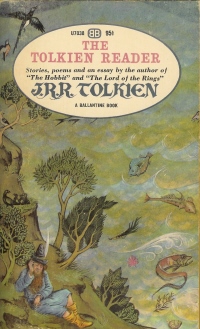
9. The Tolkien Reader - J.R.R. Tolkien
     - Leaf. By. Niggle. 

10. Tiffany Aching (The Wee Free Men) - Terry Pratchett

11. Ivanhoe - Sir Walter Scott

12. Pure Dead Magic - Debi Gliori
     - This is one of my most favorite books to re-read. It never gets old. It's funny, it's weird, and it's fantastic. It helped me to understand that a weird sense of humor isn't a bad thing, you just have to find the right people, and that keeping your living great-great-great-great-great-great-grandmother in your freezer is perfectly acceptable. 

13.The Dark is Rising - Susan Cooper

14. Earthsea Cycle - Ursula K. LeGuin

15. Captain America: White - Jeph Loeb
     - I actually wrote a previous blog article about this one - Cap and Bucky: A Love Story

16. Defiance - C.J. Redwine
     - I read this book at a time when I was dealing with extreme chronic anxiety, and one of the main characters reacted to things and thought about things the exact same way I did, and he still managed to save everyone and function, for me this was a wonderful revelation, even if it was fiction.

17. Sherlock Holmes - Sir Arthur Conan Doyle

18. A Long, Long Sleep - Anna Sheehan
     - In this retelling of Sleeping Beauty, the "princess" is not the girl sleeping waiting to be rescued, but the resilient briars that grow around the castle keeping everyone out, and the princess safe. You can be your own hero.

19.The Once and Future King - T. H. White

20. Macbeth - William Shakespeare
     - While reading this play in school I actually laughed out-loud at several points (this is not a comedy). My classmates found it odd. I love this play, and find it hilarious which further notified me of my sometimes dark sense of humor.

21. Dracula - Bram Stoker

22. A Tale of Two Cities - Charles Dickens
     - Sydney Carton's act of selflessness. Need I say more?

23. Through the Looking Glass - Lewis Carroll

So, there you have it. I would love to hear your thoughts and comments! 

Thursday, March 30, 2017

Cool Tolkien art

Hey, hope everyone's Thursday is shaping up all right.

Why don't you take a break from whatever you're doing (homework, chores, competing in the Hunger Games) to check out this awesome graphic novel version of the first part of The Silmarillion:
J.R.R. Tolkien’s Ainulindalë


Until tomorrow.

Tuesday, October 27, 2015

[Not] Here at the end of all things (or WHY DID THE LAST EXTENDED EDITION HOBBIT FILM HAVE TO BE RATED R???)

Those of you who have been following this blog for a while may have guessed that I like Tolkien a bit.

You would be right.

Of all my posts on this blog, I think the one subject I've written the most on is Tolkien - his life, his work, and adaptations of his stories - especially the Hobbit movies.

Ah, the Hobbit movies.

I speak disparagingly of them but I have a rather fond affection for the films, even while I question some (or most) of the choices Peter Jackson and team made with them.

Parts of the films were fantastic.

If you've been following this blog for a while, you may also have noticed how closely I've followed the Hobbit movies, from the first trailers to the films themselves and extended editions thereafter. Despite my disappointment with the films, I've faithfully attended theaters (twice at midnight) to view Peter Jackson's Hobbit movies, always returning in spite of previous disappointments.

I psyche myself up until I'm super excited, go to the theater, watch the movie, come home feeling let down, mope around the house for a few days, and end up buying the extended edition.

All things considered, I think I'm a pretty loyal fan.

Imagine my reaction, then, when my brother called to relay some shocking news related to the final extended edition Hobbit film.

It's rated R.

I didn't believe him.

But when I did an online search and saw from multiple entertainment news sources that the extended edition of The Hobbit: The Battle of the Five Armies will, in fact, be an R-rated film, I had to believe it.

So why is this such a big deal? (You may ask.)

I don't watch R-rated films.

(Why not?)

For religious reasons and as a matter of principal, I choose not to view things that are significantly disturbing or inappropriate. This has led to a degree of disappointment over the years as I've heard time and time again about a movie that sounds exciting only to find out later that it's rated R. 

But I never thought the day would come when I'd have to skip out on a Lord of the Rings movie because of an R-rating.

I feel betrayed. 

Peter Jackson made three wonderful movies out of The Lord of the Rings trilogy, none of which were rated R. He proceeded to make three less wonderful but still enjoyable movies out of The Hobbit. None of these were rated R. Now, on the absolutely final movie - with the absolutely final release of that movie (the one thing I still could look forward to even though the official trilogy had come to an end) he pulls out an R-rating. "Disappointed" doesn't even cover it.

Yes, I could go see the movie anyway. After all, no one's holding a gun to my head forcing me not to watch R-rated movies. And I'm old enough to make these decisions for myself. But I've already made my decision, a long time ago, in fact, and I've only cemented it over the years. Here, at the end of all things, is one Tolkien movie I won't be seeing.

I wonder what Tolkien would say - but that's speculative and therefore irrelevant.

Thank you, Peter Jackson, for some wonderful movies and a fun (if rocky) ride. I'm sorry I can't be there at the end of all things. But I'm also sorry that you had to prevent me from coming. I'm sure we can still be friends.

My reaction on hearing that the extended edition of Battle of the Five Armies will be rated R


If you've finished reading this little complaint, I very much want to know what you think about the last extended edition Hobbit movie being rated R. Do you feel miffed with me? Or do you find my viewpoint rather extreme? A shire-farthing for your thoughts.

Tuesday, September 22, 2015

Happy Hobbit Day Once Again


Mae govannen (well met), dear readers!

You may have  noticed that this blog kind of dropped off the face of the earth for several months. I can offer no sufficient explanation for this silence, so I won't.

Today we celebrate the birthdays of Bilbo and Frodo, International Hobbit Day, and the two-year anniversary of this blog. Hooray!

Let's celebrate in true hobbit fashion - with humor, song, and, of course, food. 

Firstly, humor.


Impress your friends with these hobbit-related jokes:

"Why didn't Bilbo want to go to Laketown?"
"He preferred cities with less Smaug."

"How many hobbits does it take to screw in a light-bulb?"
"Some hobbits changed one before, but I'm not Shire how many it Took."

"An elf walks into a bar. A hobbit laughs and walks under it."

"I would make another Lord of the Rings joke, but all the good ones Aragorn."

(I cannot take credit for any of these jokes: I found them online. I am sincerely sorry not to be as clever as you thought I was.)

Secondly, a song.


Warm your hearths and ale with this traditional hobbit walking song:

Upon the hearth the fire is red,
Beneath the roof there is a bed;
But not yet weary are our feet,
Still round the corner we may meet
A sudden tree or standing stone
That none have seen but we alone.
Tree and flower and leaf and grass,
Let them pass! Let them pass!
Hill and water under sky,
Pass them by! Pass them by!
Still round the corner there may wait
A new road or a secret gate,
And though we pass them by today,
Tomorrow we may come this way
And take the hidden paths that run
Towards the Moon or to the Sun.
Apple, thorn, and nut and sloe,
Let them go! Let them go!
Sand and stone and pool and dell,
Fare you well! Fare you well!
Home is behind, the world ahead,
And there are many paths to tread
Through shadows to the edge of night,
Until the stars are all alight.
The world behind and home ahead,
We'll wander back to home and bed. 
Mist and twilight, cloud and shade,
Away shall fade! Away shall fade!
Fire and lamp, and meat and bread,
And then to bed! And then to bed!
A classic.

Thirdly, (and most importantly) food.


If you're wondering what to make for your Shire party, this website has a variety of recipes for dishes featured in Chapter 1 of The Hobbit. If seed cake, mince-pies, apple-tart, cheese, biscuits, eggs(ses), and chicken sound good to you, then you're set. (And don't forget po-ta-toes - boiled/mashed/stuck in a stew).


And, finally, as an added bonus, a piece of shire wisdom:

“There is nothing like looking if you want to find something. You certainly usally find something, if you look, but it is not always quite the something you were after.” 
Happy Hobbit Day. May the hair on your toes never fall out.

Thursday, February 12, 2015

A Middle-Earth (sort-of) Romance for Valentine's Day

“Farewell sweet earth and northern sky,
for ever blest, since here did lie
and here with lissom limbs did run
beneath the Moon, beneath the Sun,
Lúthien Tinúviel
more fair than Mortal tongue can tell.
Though all to ruin fell the world
and were dissolved and backward hurled;
unmade into the old abyss,
yet were its making good, for this―
the dusk, the dawn, the earth, the sea―
that Lúthien for a time should be.”  
- J.R.R. Tolkien, The Silmarillion

So, for Valentine's Day, I was going to write a post about the romance of J.R.R. Tolkien and his wife Edith, but then I found this Wikipedia article that says everything I wanted to say and even has some awesome quotes that I never would have found on my own. It is very interesting. If you've read the story of Beren and Luthien in the Silmarillion but don't know the "real" story, it's definitely worth reading. I think you'll enjoy it. It's like something from a romantic idyll or from this one book I read that had this story of these two people who fell in love but they couldn't get married right away because one of them was an elf and one was - wait, that was the Silmarillion.

So how about this (since it is Valentine's Day) : Instead of writing up the facts in prose, seeing as Wikipedia has already beat me to it, I will render them in poetry. Everything's better in poetry, right? I mean Tolkien himself taught us that (see my post on Tolkien's poem "Mythopoeia").

For better or for worse (and entirely avoiding any thoughts on what Tolkien would say about it), I submit "Beren and Luthien":

In the spring of the world when you danced

Time stood still within my breast

Your eyes were bright as the sea of white stars

That swirled around your feet

But your hair was as dark as the valley of death

And filled with innumerous shadowings


I thought upon the days of our youth

When routed from my mother's house

Heavy with the scent of death

I came upon you sorrowing

Our tender hearts, o'er eager for love

Met once for all beneath the leaves


Long I sought you wandering far

As ever nearer out of reach

I chased your hem by the light of stars

We found each other all for once

And to each one clung quivering

You cast away your other life, to be but mine forevermore


We passed through dark and out of day

In woods of nightshade morrowless

And once we met in the valley wide

Amidst the war-death clamoring

And then it was my heart stood still

When you danced in the white stars sorrowless


When I returned from fog of war

We met again beneath the leaves

To cherish our eternity

And raise our children by the light of stars

And though your eyes were not as bright

As when you danced in the white sea-foam

My love for you could never dim

Our hearts danced once across the years


The story has gone crooked now

And I cannot plead to the moon-high gods

But into the stone of forevermore

I carve this word as immense as the sea


For me it contains the spring of the world

Held fixed in a clearing of white snow-flowers

As bright as the light that stood in your eyes

And your hair all shadowed with stars

Saturday, December 6, 2014

Mythopoeia: Tolkien's argument for the power of myth

Hi. Remember that post three ages of men ago about five semi-obscure works by Tolkien that are really cool? They were:

1. The Tolkien Reader
2. Smith of Wooton Major
3. Letters from Father Christmas
4. Mythopoeia
5. The Fall of Arthur

(Here is a link to that post, where I go into depth about The Tolkien Reader: http://woodbtwntheworlds.blogspot.com/2014/05/5-works-by-tolkien-you-may-not-have.html).

Anyway, I'd like to talk about another of the works on that list. This is the poem "Mythopoeia."

"Mythopoeia" (I spelled it right twice now, I should win something) was the product of an argument between Tolkien and his friend C.S. Lewis. Lewis argued that myths were ultimately "worthless" because they weren't true, but Tolkien argued that myths were valuable in their own right. Apparently he didn't manage to convince Lewis in conversation, but he went home and wrote a poem about it, which he dedicated to Lewis and then showed to him. The poem must have done the trick; it reportedly convinced Lewis that myths had value and weren't just a pack of worthless lies. The moral we learn from this little story is that, if in prose you don't succeed, try, try a poem. "Mythopoeia" also functions as a great defense of fantasy literature, especially taken along with Tolkien's essay "On Fairy Stories," which you can find in The Tolkien Reader.

Because "Mythopoeia" can be difficult to come across, I've reproduced it below, taken from this website. When you're done, you might want to listen to this analysis of the poem by Dr. Corey Olsen - but all, of course, at your own choosing.
To one who said that myths were lies and therefore worthless,
even though "breathed through silver"
PHILOMYTHUS TO MISOMYTHUS 
You look at trees and label them just so,
(for trees are `trees', and growing is `to grow');
you walk the earth and tread with solemn pace
one of the many minor globes of Space:
a star's a star, some matter in a ball
compelled to courses mathematical
amid the regimented, cold, Inane,
where destined atoms are each moment slain.
At bidding of a Will, to which we bend
(and must), but only dimly apprehend,
great processes march on, as Time unrolls
from dark beginnings to uncertain goals;
and as on page o'erwitten without clue,
with script and limning packed of various hue,
and endless multitude of forms appear,
some grim, some frail, some beautiful, some queer,
each alien, except as kin from one
remote Origo, gnat, man, stone, and sun.
God made the petreous rocks, the arboreal trees,
tellurian earth, and stellar stars, and these
homuncular men, who walk upon the ground
with nerves that tingle touched by light and sound.
The movements of the sea, the wind in boughs,
green grass, the large slow oddity of cows,
thunder and lightning, birds that wheel and cry,
slime crawling up from mud to live and die,
these each are duly registered and print
the brain's contortions with a separate dint.
Yet trees and not `trees', until so named and seen -
and never were so named, till those had been
who speech's involuted breath unfurled,
faint echo and dim picture of the world,
but neither record nor a photograph,
being divination, judgement, and a laugh,
response of those that felt astir within
by deep monition movements that were kin
to life and death of trees, of beasts, of stars:
free captives undermining shadowy bars,
digging the foreknown from experience
and panning the vein of spirit out of sense.
Great powers they slowly brought out of themselves,
and looking backward they beheld the Elves
that wrought on cunning forges in the mind,
and light and dark on secret looms entwined.
He sees no stars who does not see them first
of living silver made that sudden burst
to flame like flowers beneath the ancient song,
whose very echo after-music long
has since pursued. There is no firmament,
only a void, unless a jewelled tent
myth-woven and elf-patterned; and no earth,
unless the mother's womb whence all have birth.
The heart of man is not compound of lies,
but draws some wisdom from the only Wise,
and still recalls him. Though now long estranged,
man is not wholly lost nor wholly changed.
Disgraced he may be, yet is not dethroned,
and keeps the rags of lordship one he owned,
his world-dominion by creative act:
not his to worship the great Artefact,
man, sub-creator, the refracted light
through whom is splintered from a single White
to many hues, and endlessly combined
in living shapes that move from mind to mind.
Though all the crannies of the world we filled
with elves and goblins, though we dared to build
gods and their houses out of dark and light,
and sow the seed of dragons, 'twas our right
(used or misused). The right has not decayed.
We make still by the law in which we're made.
Yes! `wish-fulfilment dreams' we spin to cheat
our timid hearts and ugly Fact defeat!
Whence came the wish, and whence the power to dream,
or some things fair and others ugly deem ?
All wishes are not idle, not in vain
fulfilment we devise - for pain is pain,
not for itself to be desired, but ill;
or else to strive or to subdue the will
alike were graceless; and of Evil this
alone is dreadly certain: Evil is.
Blessed are the timid hearts that evil hate,
that quail in its shadow, and yet shut the gate;
that seek no parley, and in guarded room,
through small and bare, upon a clumsy loom
weave rissues gilded by the far-off day
hoped and believed in under Shadow's sway.
Blessed are the men of Noah's race that build
their little arks, though frail and poorly filled,
and steer through winds contrary towards a wraith,
a rumour of a harbour guessed by faith.
Blessed are the legend-makers with their rhyme
of things nor found within record time.
It is not they that have forgot the Night,
or bid us flee to organised delight,
in lotus-isles of economic bliss
forswearing souls to gain a Circe-kiss
(and counterfeit at that, machine-produced,
bogus seduction of the twice-seduced).
Such isles they saw afar, and ones more fair,
and those that hear them yet may yet beware.
They have seen Death and ultimate defeat,
and yet they would not in despair retreat,
but oft to victory have turned the lyre
and kindled hearts with legendary fire,
illuminating Now and dark Hath-been
with light of suns as yet by no man seen.
I would that I might with the minstrels sing
and stir the unseen with a throbbing string.
I would be with the mariners of the deep
that cut their slender planks on mountains steep
and voyage upon a vague and wandering quest,
for some have passed beyond the fabled West.
I would with the beleaguered fools be told,
that keep an inner fastness where their gold,
impure and scanty, yet they loyally bring
to mint in image blurred of distant king,
or in fantastic banners weave the sheen
heraldic emblems of a lord unseen.
I will not walk with your progressive apes,
erect and sapient. Before them gapes
the dark abyss to which their progress tends -
if by God's mercy progress ever ends,
and does not ceaselessly revolve the same
unfruitful course with changing of a name.
I will not treat your dusty path and flat,
denoting this and that by this and that,
your world immutable wherein no part
the little maker has with maker's art.
I bow not yet before the Iron Crown,
nor cast my own small golden sceptre down.
In Paradise perchance the eye may stray
from gazing upon everlasting Day
to see the day-illumined, and renew
from mirrored truth the likeness of the True.
Then looking on the Blessed Land 'twill see
that all is as it is, and yet may free:
Salvation changes not, nor yet destroys,
garden not gardener, children not their toys.
Evil it will not see, for evil lies
not in God's picture but in crooked eyes,
not in the source but in the tuneless voice.
In Paradise they look no more awry;
and though they make anew, they make no lie.
Be sure they still will make, not been dead,
and poets shall have flames upon their head,
and harps whereon their faultless fingers fall:
there each shall choose for ever from the All.
There you have it: Tolkien's "Mythopoeia." Are you convinced? 


Tuesday, November 25, 2014

Musings on Thanksgiving (with special appearances by C.S. Lewis, Victor Hugo, Thorin Oakenshield, and William Shakespeare)

(Wouldn't it be cool if we could change the background of this blog to match the seasons? Yeah, I don't know how to do that. Then again, the Wood between the Worlds probably doesn't have seasons. Anyway, here is a picture that looks like it could have been taken in the Wood between the Worlds in autumn, you know, if the Wood had an autumn.)
The weather is turning colder, the trees losing their leaves, and the stores displaying Christmas merchandise - which must mean that Thanksgiving is upon us.

I have nothing against listening to Christmas music once November hits, but let's make sure we don't rush over Thanksgiving in our excitement for Christmas to come; this holiday deserves its own time in the spotlight.

What's Thanksgiving about? Pilgrims and Indians? The Mayflower? The founding of America? Maybe, but if we want to find the true heart of Thanksgiving, all we need to do is remember the name of this holiday. Giving thanks is a sweet, joyous, and plentiful harvest in and of itself. C. S. Lewis, in Reflections on the Psalms, wrote:

“I think we delight to praise what we enjoy because the praise not merely expresses but completes the enjoyment; it is its appointed consummation. It is not out of compliment that lovers keep on telling one another how beautiful they are; the delight is incomplete till it is expressed. It is frustrating to have discovered a new author and not to be able to tell anyone how good he is; to come suddenly, at the turn of the road, upon some mountain valley of unexpected grandeur and then to have to keep silent because the people with you care for it no more than for a tin can in the ditch; to hear a good joke and find no one to share it with. . . . The Scotch catechism says that man’s chief end is ‘to glorify God and enjoy Him forever.’ But we shall then know that these are the same thing. Fully to enjoy is to glorify. In commanding us to glorify Him, God is inviting us to enjoy Him.”

Are you ever struck by the incredible beauty of this world? Now is the time to express your delight, wonder, and gratitude for the glorious things around you. And our gratitude shouldn't be confined to the subject of the beauty of nature; there are so many things to be grateful for that it's staggering. Even in our darkest moments, there is something amazingly beautiful or wonderful or helpful for which we can express thanks. And this thanksgiving shouldn't be confined to Thanksgiving. We can express gratitude all year long. But this is the time to focus on our gratitude and reflect upon it. If you're unsure of how to express your gratitude and to whom, take a cue from the words of Victor Hugo:

"To give thanks in solitude is enough. Thanksgiving has wings and goes where it must go. Your prayer knows much more about it than you do."

Whether its in prayer to God, in conversation to your friends or family, or in complete solitude in your journal or private thoughts, find some time to give thanks this Thanksgiving.  

But also find some time to enjoy good food, because that too is an important part of this holiday, and, after all, as Thorin says to Bilbo in The Hobbit:


"If more of us valued food and cheer and song above hoarded gold, it would be a merrier world."

So from the depths of my heart I truly hope you have a wonderful Thanksgiving and find both something to be thankful for and some food to enjoy. And I pray, with William Shakespeare:
 

"O Lord, that lends me life, lend me a heart replete with thankfulness."
                                      
(Henry VI, Part II)


Wednesday, May 14, 2014

5 works by Tolkien you may not have known existed, but which may just change your life

http://upload.wikimedia.org/wikipedia/en/c/c0/Tolkien_reader.jpg

Everybody has heard of The Lord of the Rings and The Hobbit, and most people have probably read them. Many people have also read The Silmarillion, which is less popular and slightly more difficult to read (though it's really not that bad and well worth it). Then there are Tolkien's other Middle-Earth related writings, published posthumously by his son and not as well known as The Lord of the Rings and The Silmarillion. Included in this group is The Children of Hurin, Unfinished Tales, and the extensive History of Middle-Earth series. The first of these is a longer retelling of one of the most tragic stories in The Silmarillion, the second a collection of somewhat miscellaneous writings by Tolkein that pertain to the Four Ages of Middle-Earth. The History of Middle-Earth is a series of books put together by Christopher Tolkien that chronicle the development of Middle-Earth and the larger world of The Silmarillion in Tolkien's writings.

But often overlooked are Tolkien's other writings that do not pertain directly to the world of Middle-Earth and The Silmarillion. These works are barely ever mentioned in conversations between fans of Tolkien, and many people (myself included until a few years ago) do not even know that these other books exist. But those who do know that they have found a treasure. These other works I speak of comprise short stories, poems, essays, and other miscellanea. By turns surprising, ponderous, funny, brilliant and beautiful, these are works that every Tolkien fan should read - and probably some other people who aren't Tolkien fans should read them, too. Here's the list:

1. The Tolkien Reader
2. Smith of Wooton Major
3. Letters from Father Christmas
4. Mythopoeia
5. The Fall of Arthur

Caution: This review may contain one or two brief rants, diverse literary references, and general reveling in the supreme awesomeness of Tolkien.


The Tolkien Reader


What Goodreads has to say:


An invitation to Tolkien's world. This rich treasury includes Tolkien's most beloved short fiction plus his essay on fantasy. 

[What? That's it?]
 

What I have to say:


First on my list is The Tolkien Reader. This little volume published during Tolkien's lifetime contains a short dialogue play, Tolkien's monumental essay "On Fairy-Stories," the only allegory he ever wrote, a short story, and several surprisingly wonderful and wonderfully surprising poems. The Tolkien Reader, more than anything else on this list, is the single Tolkien book apart from The Lord of the Rings and The Hobbit that I would urge every Tolkien fan to read. And the good news is that, because of its relative obscurity, you can usually buy the book for pretty cheap. I found it for $1.00 at a book-sale, picked it up, bought it, read it, and found that it changed me forever.

Let me tell you what is in this book. First there's an essay by Peter S. Beagle, which is kind of cool, if only because I love Peter Beagle (author of The Last Unicorn). But after this we get into the Tolkien part, and all of that just leaves Beagle's essay in the dust.

The first piece by Tolkien is "The Homecoming of Beorhtnoth, Beorhthelm's Son," which is a short play in the form of a dialogue between two characters. The scene takes place just after the famous Battle of Maldon, fought in the year 991 in England. This battle is the subject of an old Anglo-Saxon poem, now partly lost. Tolkien's dialogue picks up where the Anglo-Saxon poem ends: the battle is over, the invading Vikings have utterly defeated the Anglo-Saxon army, and two Anglo-Saxon men have been sent to the battlefield to find their leader's body and bring it back for burial. The play is at once like and unlike Tolkien's more familiar works. The younger of the two characters is a poet, and waxes poetic in the Epic Anglo-Saxon tradition, but the older man questions the poetry which glorifies the actions of heroes and omits the story of the common people. "The Homecoming of Beorhtnoth, Beorhthelm's Son" reminds me of some Early Modernist Irish plays I've read, and is vaguely reminiscent of the style of playwrights like Samuel Beckett and Tom Stoppard. Thus it is rather surprising coming from Tolkien, and yet it is also clear that no one but Tolkien could have written it.

Next in The Tolkien Reader comes Tolkien's monumental essay "On Fairy Stories," which I frequently wish that everyone had read, because it would be so much easier when I want to reference it, and, believe me, that happens a lot. This essay is probably the best argument I've ever heard for fantasy literature (though C. S. Lewis also wrote some very eloquent and convincing defenses of fantasy literature, especially for children - see On Stories and Other Essays on Literature). This essay also introduces the word "eucatastrophe" coined by Tolkien himself, which again I wish that everyone knew, because it would be SO helpful if I could reference it in discussions and papers. It's a very useful word to know, and it's also AWESOME. I'll just tell you what it means now. "Eucatastrophe" is a wonderful catastrophe, like the kind that occurs at the end of fairy tales; when everything looks darkest and it seems as if all hope is lost, something happens to reverse the situation. A good example is the end of Sleeping Beauty, when the prince kisses the princess and wakes her up. If you still don't understand what the word means, just think: "The Eagles are coming! The Eagles are coming!" and you'll probably get it. Of course, Tolkien explains it much better than I can, so read the essay. It is a little long, but extremely interesting and enlightening. It opens up your eyes to look at fairy tales and fantasy literature in a whole new way, and it also gives several arguments for the value of fantasy literature, which you can use against people who tell you that reading fantasy novels is a waste of time.

And now we come to my very favorite part of The Tolkien Reader (probably with the exception of the poems at the end): "Leaf By Niggle." This is the only allegory Tolkien ever wrote, and no, The Lord of the Rings is NOT an allegory, nor are The Chronicles of Narnia (though obviously Tolkien didn't write those). An allegory is a story in which every character and event represents something larger. Probably the most famous allegory is The Pilgrim's Progress. Allegories were very popular in Medieval England, especially as plays; there was usually one character named "Everyman" who represented the common man, as well as characters symbolizing things like virtue, sin, pride, honesty, etc. The Narnia books are not allegorical because, while many of the characters suggest things beyond themselves, they don't all represent something specific - they are characters in their own right. Also, Aslan does not symbolize Christ, he is Christ. Thus, people who say that The Lord of the Rings or The Chronicles of Narnia are allegorical usually don't know what they're talking about. And so "Leaf By Niggle" is Tolkien's only allegory. And, wow, is it amazing.

This piece tells the story of Niggle, a painter who knows he has to go on a journey someday, but keeps putting it off. He spends endless amounts of time working on his "masterpiece" a painting of a tree with many leaves, and often neglects or at least resents doing other "more important" things. But eventually a man arrives to take him on his journey, and he has to leave his painting and everything else behind. (What do you think the journey represents?) I'll stop the summary here and let you read the story for yourself; it's not very long. Once again, the story is startlingly different from all of Tolkien's other writings, yet also uniquely Tolkienesque. The story functions on multiple levels, including allegory and autobiography: Niggle resembles Tolkien himself in many ways (Tolkien was notorious for working forever on projects and frequently not finishing them). Yet in many ways "Leaf By Niggle" feels almost more like something written by Tolkien's friend C.S. Lewis, especially The Great Divorce. Read it once, figure out what everything in the story represents, and then maybe read it again. Like "On Fairy Stories," "Leaf By Niggle" changed the way I look at and think about art in all of its forms, and especially changed how I see the role of the artist himself.

"Farmer Giles of Ham," a longish short story about a country farmer who encounters a dragon, is the next work in the reader. While not as deep or meaningful as the previous works in the collection, this story is a lot of fun, and is very obviously written by Tolkien. It shares some similarities with The Hobbit, and in fact might be described as a very compressed, lighter version of The Hobbit. But of course it's not exactly the same; it's an original and enjoyable story in its own right. Read it and try to figure out what a blunderbuss is (and please let me know what it is when you find out).

The final pages of The Tolkien Reader contain a collection of poems written by Tolkien, entitled, "The Adventures of Tom Bombadil and Other Verses from the Red Book" so it's hobbit poetry!! How exciting is that?? Anyway, the collection starts off with two poems about Tom Bombadil, for all the Bombadil fans out there (you know who you are), then launches into a series of diverse and wonderful poems. There's one that's super creepy, another about a mariner that's super fun and, I think, the source of the name "Dumbledore." Then there are some that are just lighthearted playing around: there's one about a cat dreaming about his ancestors, another about an oliphaunt (probably written by a certain hobbit that you know well), one about a shadow-bride, and another with a troll in it. But my favorite are the last two. "The Sea-Bell" (also known in the Red Book as "Frodo's Dream") is my very favorite. I read it over and over again. It is so beautiful and so desolate. The first time I read it, I was rather startled - once again it was so unlike anything and everything else I'd ever read by Tolkien. It almost seemed more like something T.S. Eliot might have written, especially considering certain passages in "The Love Song of J. Alfred Prufrock." And, when I read this poem, I realize how great of a poet Tolkien was. "The Sea-Bell" both soothes and stirs, setting something deep within me into motion.

The final poem tells of the meeting of a mortal princess with one of the last boats of elves headed for the Undying Lands. It is lovely, lyrical, and faintly sorrowful in the way that much of Tolkien's writing is. This piece was clearly written by the author of The Lord of the Rings.

Hey, are you still here? Well, since it took me that long to get through only The Tolkien Reader, I think I'll save the other works on my list for another time. And don't worry, they won't take as long as this one did. In the meantime, the good news it that I've already reviewed The Fall of Arthur! I will get through every work on this list someday - but it is not this day.

Tuesday, April 15, 2014

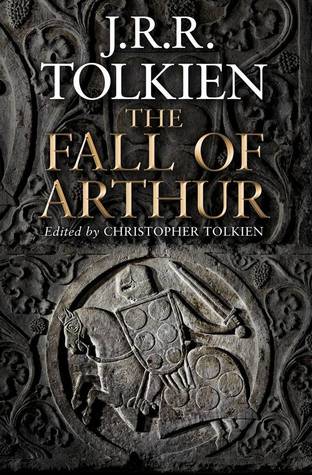
The Fall of Arthur: Unfinished Masterpiece

16075147
Title: The Fall of Arthur
Author: J.R.R. Tolkien
Date of Publication: 2013
Publisher: Houghton Mifflin Harcourt

What I have to say:

I have never read another book in which the words themselves were such a source of delight.

We always talk about how Tolkien was a linguist - and sure, he invented a pretty awesome language for the elves, and the writing in Lord of the Rings is wonderful, but - holy cow!!! The Fall of Arthur is amazing!!!

Listen to this:
"Guinever hiding   in the grey shadow 
watched and waited,   while the world faltered" (III.181-82).

And this:

Wolves were howling   on the wood's border;
the windy trees   wailed and trembled,
and wandering leaves   wild and homeless
drifted dying   in the deep hollows.
Dark lay the road   through dank valleys
among mounting hills   mist-encircled
to the walls of Wales   in the west frowning
brownfaced and bare.   To the black mountains
horsemen hastened,   on the houseless stones
no track leaving.   Tumbling waters
from the fells falling,   foaming in darkness,
they heard as they passed   to the hidden kingdom.
Night fell behind.   The noise of hooves
was lost in silence   in a land of shadow. (IV.1-14)  

I hope you enjoyed that as much as I did. And that is just a sample from Tolkien's narrative poem on the downfall of Camelot - his only venture into Arthurian legend according to the dust jacket, though, as someone pointed out on Goodreads, he also wrote this thing called Sir Gawain and the Green Knight. The poem is thoughtful, masterful, breathtaking, and, catastrophically, unfinished. Despite the comment from one of his friends that, "You simply must finish it!" this is another work that Tolkien never finished. The upside of that is that it's a quick read - only 57 pages, 70 if you count the notes on the text. And commentary by Christopher Tolkien on the larger context of the poem, both in Arthurian tradition and in Tolkien's writings in general, as well as on the evolution of the poem, follows the authorial text (I'm sure it's very interesting, but I didn't read it).

Here's what Goodreads has to say:

The world's first publication of a previously unknown work by J.R.R. Tolkien, which tells the extraordinary story of the final days of England’s legendary hero, King Arthur.

The Fall of Arthur recounts in verse the last campaign of King Arthur who, even as he stands at the threshold of Mirkwood, is summoned back to Britain by news of the treachery of Mordred. Already weakened in spirit by Guinevere's infidelity with the now-exiled Lancelot, Arthur must rouse his knights to battle one last time against Mordred's rebels and foreign mercenaries.

Powerful, passionate and filled with vivid imagery, The Fall of Arthur reveals Tolkien's gift for storytelling at its brilliant best. Originally composed by J.R.R. Tolkien in the 1930s, this work was set aside for The Hobbit and lay untouched for 80 years.

Now it has been edited for publication by Tolkien's son, Christopher, who contributes three illuminating essays that explore the literary world of King Arthur, reveal the deeper meaning of the verses and the painstaking work that his father applied to bring it to a finished form, and the intriguing links between The Fall of Arthur and his greatest creation, Middle-earth.


[Also, this book was a goodreads choice winner for poetry in 2013, because Tolkien is just so good that he can still win awards for his literature after being dead for 41 years.]

Thursday, January 9, 2014

The Desolation of Smaug fails to live up to my (perhaps too lofty) expectations

The Hobbit: The Desolation of Smaug

A few months ago, I posted an analysis of the trailer for the upcoming movie, The Desolation of Smaug, the second installment in the Hobbit movie trilogy. I titled my analysis: "All the tales and songs fall utterly short." I would love to post that as the title of my review of the movie itself, but unfortunately, a more accurate title would be something like: "The movie falls utterly short of all my expectations." Because, while I enjoyed the movie and did find certain moments very wonderful, I was, ultimately, rather disappointed.

Now, because I don't want to seem like a pessimist and because I do want to express my admiration and appreciation for the parts of the movie that I thought were really great, I will start with the positive (and end with the negative so that, after you finish reading this, you will either be completely depressed or very angry at me).

So let's start with the single best thing about the movie: Martin Freeman. I'm almost kidding, but not really. Wow, he is a talented actor. In my opinion, while he showed great acting throughout, there were three scenes in particular when he really shone: the barrel scene, the spider and ring sequence, and the conversation with Smaug. What was great about these scenes was that they really just focused on Bilbo and, in these moments, we saw him developing as a character in significant ways.

In my opinion, the first moment when we really got to see Bilbo doing and feeling significant things was the spider sequence in Mirkwood. By this, I mean the sequence that starts with Bilbo climbing the tree and ends after he kills the baby spider and begins to realize what the ring is doing to him. I loved the tree scene because it was true to the book and expressed the idea that, even when everything seems dark and hopeless, if we just take a moment to step outside of everything and look at the bigger picture, we'll see that the issue we are struggling with isn't such a big deal after all. Then came the scene where Bilbo comes down from the tree and fights the spiders of Mirkwood. Once again, this was good because it kept an important moment from the book, namely, Bilbo really becoming courageous and going in to save the Dwarves on his own. And yes, I liked that they kept the naming of Sting more or less as it was in the book, because that also is an important moment in both the progression of the book and in Bilbo's character development. Lastly, I liked the scene with Bilbo and the ring because it added a new level of complexity to his character and because I enjoyed watching the process he went through to come to the realization that the ring was doing something to him.

The barrel scene was great because we saw the growth of Bilbo's role in the company. I thought it was interesting that Thorin was counting on Bilbo to get him and the other dwarves out of prison, and when Bilbo fulfilled his expectation, it showed that he really is becoming a second leader to the company. He saved them from the spiders, and now he saves them from the Elven King's dungeons. But my favorite part, of course, was when, after all the dwarves had gotten into the barrels and slid into the river, Bilbo realized the one flaw in his plan. The way that Martin Freeman conveyed this process of realization was brilliant and very funny. He didn't immediately figure it out, instead, he gave the audience time to watch it all play out on his face and in his gestures. The result was very effective, and, consequently, this was one of my favorite scenes.

I also liked the scene on top of the Lonely Mountain, when Bilbo refused to give up on finding the keyhole, but I don't feel like I have a lot to say about that, other than that it showed how different Bilbo is from the dwarves (which is a theme in the book, as well) so I'll move on.

One of my favorite scenes was Bilbo's conversation with Smaug. I LOVED that they kept several of Bilbo's riddles along with much of the original dialogue from the book. And both actors did a fantastic job, though of course we could only hear Benedict Cumberbatch and it didn't even sound like him. I guess that is a mark of just how well he played Smaug. It was great to see all the stages Bilbo went through in the conversation, from scared to confident and then back to scared but still determined to get the Arkenstone. And, while we are here, we may as well consider the question: did Bilbo actually get the Arkenstone? Initially I was pretty sure he didn't, as we never saw him pick it up, but after talking to other people about it, I become less convinced. After all, when Thorin confronts Bilbo and asks him if he has the Arkenstone, Bilbo doesn't answer, whereas if he really doesn't have the Arkenstone on him, couldn't he have just told Thorin so? The fact that he avoids a direct answer makes me think that maybe he does have the stone, after all.

Anyway, as you can gather, most of my favorite moments involved Bilbo, the... uh... hobbit. Because contrary to the evidence, this movie actually is titled The Hobbit. Really? Not The Elves or The Dwarves Riding in Barrels or The Man from Lake Town? Not even The Elf and the Dwarf Who Have a Weird Romance? No, it really is called The Hobbit.

But speaking of weird romance, I did enjoy the Tauriel/Kili plotline, mostly, I think, because it gave us a break from all the wild, fast-paced action and allowed for some fun character development. So while it was a little cheesy in parts, I didn't really have any objections to it.

Other things I liked: I loved Bard. I'd been a little dubious about his character from seeing the trailers and posters, but I found him a very compelling, strong and likeable character. I also thought the portrayal of Smaug was great. He was very impressive visually, and, as mentioned already, Cumberbatch did a very effective Smaug voice, apparently inspired by his father's performance in reading The Hobbit aloud to his son.

And now, on to the things that I DID NOT like. You can stop here if you like; I won't be offended.

There was way too much action. The first ten to twenty minutes of the movie felt like whiplash. We were running from the orcs, then we were in Beorn's house, then we said hello and goodbye to Beorn, then we were in Mirkwood, then we were with the spiders, and then we were in Thranduil's dungeons. I would have liked a little more conversation, a little more insight into some of the characters, and a little more focus on Bilbo (the title character) throughout.

Once we reached the Elven Halls, I felt like we slowed down a little, just enough to see some relationships forming and learn a little about Thranduil and his kingdom. But, again, we weren't there for long, and then it was into the river for the 45 minute barrel scene (yes, I know it wasn't that long, but it felt like it). And why do the orcs have to keep popping up every five minutes? I get that Azog was important for moving the action forward in the first movie, but I feel like this one had so much action and so many plotlines without the orcs pursuing Thorin, that they were really just a needless, annoying distraction.

Another somewhat irritating element of the film was that they felt the need to constantly refer back to The Lord of the Rings, as if to remind us what world we were in and what story this was. Now, I'm not against having allusions to the previous films in The Hobbit; when done tactfully, I think it can be very effective, interesting, and even funny in some cases. For example, I did enjoy seeing Peter Jackson walk across the screen while eating a carrot in Bree, but I cringed at Balin's comment on "the courage of Hobbits." I think the difference is that the first allusion was somewhat subtle and consistent with the rest of the movie, whereas Balin's comment was rather jarring because it was not consistent with the rest of the movie and thus called too much attention to itself. I was under the impression that the Dwarves had never met any hobbits other than Bilbo, or, at least, they had never had the opportunity to observe the courage of hobbits before, so Balin's comment doesn't make any sense. It would have been fine if he had said something about how Bilbo's courage never ceased to amaze him, or even if he had drawn a conjecture about the courage of hobbits from his experience with Bilbo, but as it was, I felt like his comment was very out of place and inconsistent.

Finally, what was the deal with the long and apparently useless sequence with Smaug and the Dwarves, culminating in a giant golden dwarven statue? First of all, the question arises: what in the name of Durin were they trying to accomplish? And secondly, why in the name of Durin did we need that scene? I get that the filmmakers wanted the Dwarves to mount an attack on Smaug, and I think I would have been fine with that if the scene hadn't lasted so long and seemed so utterly pointless. The Dwarves don't attack Smaug in the book, but with the way the filmmakers are developing the dwarven characters and their desire for revenge, it doesn't really make sense for Thorin & Company to sit around outside while Bilbo goes in several times and interacts with Smaug. Also, just visually, it makes sense to have a fight scene between the Dwarves and the Dragon, whereas in the book it isn't needed. So far, fine. But, again, why did the fight scene have to last so long? It seemed to go on forever and it was confusing. Nothing was accomplished. They could easily have shortened this sequence and still kept the element of the Dwarves trying to fight Smaug as well as Bilbo's courageous act at the end, which I do think was an important element.

If you've made it this far, then I have to say thanks for bearing with me, and sorry if I seemed too negative. I think it's only fair to add that, while I was disappointed in the movie, I had a lot of fun watching it and did enjoy the experience. I've seen it twice now, and enjoyed it much more the second time, after I knew what to expect. Additionally, I want to make it clear that I haven't covered every single aspect of the movie, as, if I had, this review would be much much longer. Obviously, I can't discuss the whole movie. So if you haven't seen it yet, you can go and decide for yourself whether it lives up to all of your expectations. Or maybe we shouldn't measure it by that. Can any movie ever live up to everyone's expectations? Probably not. So I suppose, at the end of this review, I should just be grateful that I get to see one of very favorite books made into three enjoyable movies. And anyway, after everything that I've said, we did get some great things out of this movie: Martin Freeman and other talented actors doing some great work, breathtaking scenescapes, a pretty awesome dragon, and a really cool song. Oh, and let's not forget Kili.