Tuesday, May 27, 2014

Musings on heroism, death, and music (and this isn't Les Mis) - prompted by Steve Turner's The Band That Played On


Title: The Band That Played On: The Extraordinary Story of the 8 Musicians Who Went Down with the Titanic
Author: Steve Turner
Date of Publication: 2011
Publisher: Thomas Nelson
Number of Pages: 242 (not including picture credits and index)

What Goodreads has to say:

 
"They kept it up to the very end. Only the engulfing ocean had power to drown them into silence. The band was playing 'Nearer, My God, to Thee.' I could hear it distinctly. The end was very close." --CHARLOTTE COLLYER, TITANIC SURVIVOR

The movies, the documentaries, the museum exhibits. They often tell the same story about the "unsinkable" "Titanic," her wealthy passengers, the families torn apart, and the unthinkable end. But never before has "that glorious band"--the group of eight musicians who played on as the "Titanic" slipped deeper and deeper into the Atlantic Ocean--been explored in such depth. Steve Turner's extensive research reveals a fascinating story including dishonest agents, a clairvoyant, social climbers, and a fraudulent violin maker. Read what brought the band members together and how their music served as the haunting soundtrack for one of modern history's most tragic maritime disasters.

[Following this summary on Goodreads are several short book reviews, which you can read here. There's also a pretty good and fairly short review at this website, if you're interested.]
 

What I have to say:

 
The musicians of the Titanic have fascinated me since I first saw the movie - the scene featuring the band playing "Nearer My God To Thee" is my favorite. I always saw them as heroes for not only going down with the ship, but calmly playing a testimonial of their faith as they faced certain death in a matter of hours. Obviously, when I heard about this book while writing a paper on the Titanic and T.S. Eliot, I was very interested, and for good reason; it's an amazing story, and it's well told by Steve Turner.

The first chapter gives some information about the Titanic and the circumstances surrounding the return of its survivors on the Carpathia. Then, for about the first half of the book, the author introduces each of the eight musicians that played on the Titanic, giving their personal and family history from the time of their birth to when they signed onto the Titanic. This part of the book is interesting and important in telling us about all of the musicians and setting up the main event of the drama, but I found it a little tedious and slow at times. The next section of the book deals with the musicians' experience on the ship before disaster struck, with quotes from some of the passengers. Next, of course, comes the main disaster, again with quotes from surviving passengers about the band and the music they played. These two sections were my favorite; I found them engaging and inspiring. The rest of the book deals with the aftermath of the Titanic disaster, especially as it concerns the musicians and their families. The author tells us about memorial services and monuments dedicated to the musicians, as well as what happened to the musicians' families after the disaster and what legal problems they were involved in as a result of their sons' deaths on the Titanic. The final chapter informs readers about a violin which may or not have been the one played by the bandmaster on the Titanic as it went down. Turner gives the evidence for both sides of the argument. When the book was published in 2011, researchers were running tests to confirm (or deny) the authenticity of the violin, and the author speculates in the book that the world will know in 2012 whether or not the violin is authentic. I did some research and discovered that the violin's authenticity was eventually confirmed, and the violin itself was auctioned off for over $1 million (why didn't anybody tell me? I would have liked to own it!) You can read about it and see pictures of the violin here.

One of the best things about this book is that it makes you realize that the musicians on the Titanic were pretty ordinary people up to the moment of the ship's collision. They were all gifted and determined musicians, but apart from that there was nothing particularly extraordinary about them. If they hadn't signed onto the Titanic they would most likely have lived fairly normal lives: pursuing their careers, getting married, traveling - in the end they would have died and the world would eventually have forgotten about them. Even the act of playing their instruments as the ship sank would not be extraordinary in any other context. They merely did their job. And yet the world sees them as heroes.

Another thing this book did for me was to complicate my idea of heroism. In the aftermath of the disaster, many people praised the Titanic's musicians as examples of British heroism. But a few disagreed: Joseph Conrad, author of Heart of Darkness, and the playwright George Bernard Shaw spoke out against the public celebration of the band's heroism. They argued that it would have been much better if, instead of playing the hero, the musicians had taken a lifeboat and reached home in safety. Shaw even suggested that the music played on deck by the band may have convinced passengers that nothing was wrong - until it was too late. He saw the musicians' actions as part of a preordained drama in which everyone was expected to face death bravely and calmly, while playing a hymn, no less.

These arguments are disquieting, to say the least. They are obviously well articulated, and the repercussions of accepting them are earth-shattering. It is the dilemma between the two poems "The Charge of the Light Brigade" and "Dulce et Decorum Est." In other words, is it better to die for your country, or to save you own skin in order to return to your family and friends in safety? I feel an overwhelming admiration for the light brigade, who plunge into battle knowing full well that they cannot hope to win and will probably all die, but I also realize the awful waste, and find that the poet of "Dulce et Decorum Est," hits close to home when he contrasts the horrors of trench warfare with the "old lie" that it is sweet and right to die for one's country. In the end, I suppose I'm a Romantic living in a Modern world, and thus with Modern sensibilities.

Anyway, no matter how disquieting I find Conrad's and Shaw's objections, when all is said and done I find that I cannot see the 8 musicians of the Titanic as anything but heroes. In spite of the fact that they may have been able to reach safety if they hadn't kept on playing, and in spite of the fact that they may have been acting out a Victorian drama, can we really say that a man declaring his faith in God while the ship goes down under him and the icy ocean swirls ever nearer is not a hero?

According to his friends and family, "Nearer My God To Thee" was the favorite hymn of the bandmaster and lead violinist, Wallace Hartley. There is even one source, possibly inaccurate, claiming that Hartley had been reserving the hymn for his funeral. When he realized that he was going to die on the Titanic, Hartley stopped playing ragtime, as the band had been doing thus far, and struck up a desperate declaration of faith. As a fellow musician is quoted as saying in Turner's book, "I believe, knowing they were doomed as a result of their own heroism, the members of the ship's orchestra thus commended their own souls to God, giving expression to their petition in the notes of their instruments" (148-149). Across the ocean and across the years, the act of Wallace Hartley and his fellow band-members stands as a declaration of faith. It survived the sinking of the Titanic amid a churning Atlantic Ocean, and it will survive the churning of the present times, amid which faith and integrity seem to have sunk.

So I ask you, faithful and persistent reader (thanks for sticking with me through my ponderings), if you stood on the deck of the Titanic with a violin resting on your shoulder and a bow in your hand, watching your chances of escape gradually grow lower and lower, and realizing the inevitable: that you were going to drown in the Atlantic very soon - what song would you play?

Perhaps it is unoriginal of me, but if I stood in that position, I really think, along with Wallace Hartley, that "I would [not] do better than play...'Nearer My God To Thee.'"

Thursday, May 15, 2014

The House of Hades by Rick Riordan

http://bookerie.files.wordpress.com/2013/10/rick-riordan-house-of-hades.gif 
Title: The House of Hades
Author: Rick Riordan
Series: The Heroes of Olympus
Date of Publication: October 8th 2013
Publisher: Hyperion Books

What Goodreads has to say:

At the conclusion of The Mark of Athena, Annabeth and Percy tumble into a pit leading straight to the Underworld. The other five demigods have to put aside their grief and follow Percy’s instructions to find the mortal side of the Doors of Death. If they can fight their way through the Gaea’s forces, and Percy and Annabeth can survive the House of Hades, then the Seven will be able to seal the Doors both sides and prevent the giants from raising Gaea. But, Leo wonders, if the Doors are sealed, how will Percy and Annabeth be able to escape?

They have no choice. If the demigods don’t succeed, Gaea’s armies will never die. They have no time. In about a month, the Romans will march on Camp Half-Blood. The stakes are higher than ever in this adventure that dives into the depths of Tartarus.

What I have to say:

Last night I finished The House of Hades, Book 4 in The Heroes of Olympus series by Rick Riordan. And yes, I know that every Percy Jackson fan on the planet has probably already read The House of Hades, but I've heard surprisingly little about it, so I'm going to review it even though I'm a little late. Also, IT WAS AWESOME!

I think this is possibly Rick Riordan's best book to date. But then I remember how much I liked The Lightning Thief and The Titan's Curse, so I'll just say that The House of Hades was definitely among the best of Rick Riordan's books so far. Here are my reasons: This book was surprisingly complex and heavy for a teen book. There were so many different stories, but I was pretty invested in all of them, unlike some of the previous books in the series. And the narrative dealt with some fairly heavy concepts. There were also a couple of threads or themes that ran throughout the book and helped to unify all the different plots and characters. And there were a few of those really great moments in the story when something you never saw coming happens suddenly and unleashes its full force upon you. These are the main reasons I felt this book worked so well. Let's go into specifics.

I loved The Lost Hero, but was pretty disappointed in Son of Neptune. While I like Percy (who doesn't?) Hazel and Frank were just lame, and so I had trouble investing in the story. I also felt that the writing was not as good as Riordan's other books, and Ella the harpy was super annoying (sorry if anyone likes her, but not really). The Mark of Athena was better, but I feel that with The House of Hades, Riordan finally delivered. It was fast-paced, multi-layered, and surprising, with fairly endearing characters and the fate of the world in the balance (hey, look - a pun). The characters really worked - at last. I like Frank now; I can stand Hazel; and I'm thinking Coach Hedge is pretty cool. I already liked all the other protagonists, but I probably like them more now than I did before, especially Leo. I think seeing all of the characters really get tested helped with this. It was cool how Hazel learned to manipulate the Mist, how Piper really stepped up when all of her companions were suddenly rendered helpless, how Jason had to make a hard decision, and also had to protect a secret for someone else, how Frank had to lead - something he was never good at, and of course, how Percy and Annabeth got through Tartarus. Percy kind of had to overcome his fatal flaw, and Annabeth had to cope in situations where her usual wisdom and cleverness wouldn't be enough. So, I really liked all the different story lines and felt that they worked well together throughout the book.

This book dealt with some heavy topics, such as the persistence of evil and suffering: it seems like these things are always there (because they are) and that they will triumph over virtue and happiness in the end. Percy despairs in Tartarus when he realizes that the monsters he keeps fighting will always regenerate and come back, wondering if it's pointless to keep fighting. Percy and Annabeth also encounter some pretty dark and depressing things in the deepest region of the Underworld, and are often filled with sorrow and despair as they make their way to The Doors of Death. I found that the narrative's wrestlings with these topics made the whole story deeper and better. I think this is because in these moments the story cut to the heart of the whole struggle of humanity, and I know that sounds cosmic, but isn't the struggle of light against dark and the pursuit of happiness in the face of suffering the ultimate story underlying everything ever written? At least it seems to be at the heart of most stories.

Another thing I really liked about this book was the way that it brought everyone's different stories together under a unifying thread. The main thread that I picked up on was choice. The very first chapters of the book have Hazel standing at a crossroads seeing the different paths she could take. At the end of this encounter, Hazel tells Hecate, "I'm not choosing one of your paths. I'm making my own" (29). In retrospect, this encounter sets up the whole book. Almost if not all of the characters have to make their own choice at some point in the story, abandoning the paths that others have already laid down for them. Hazel has to choose which way to go in order to reach The Doors of Death, and she has to choose to successfully manipulate the Mist. Jason has to choose between Camp Jupiter and Camp Half-Blood. But I think the most prominent examples occur towards the end of the story, returning to Hazel's opening dilemma and echoing her words to Hecate. So....


WARNING: SPOILER ALERT!


Bob/Iapetus chooses which identity will define him. He tells Tartarus, "I am Bob...I choose to be more than Iapetus...You do not control me" (518). Damasen chooses to throw off his punishment, telling Annabeth, "I chose myself a new fate" (524). It was very powerful for me that he came in riding on the Drakon - the instrument of his servitude. He took the thing that was being used to control his destiny and turned it to his own use. He made his own choice. Finally, when Percy and Annabeth ride up through the Doors of Death, they choose to succeed: "'We can do this,'" Percy said. 'We have to.' 'Yeah,' Annabeth said. 'Yeah, we do'" (531). I found it very powerful that all of the characters chose to succeed - and then did. It was as if they realized that all that was needed to succeed was for them to decide to succeed. No matter what anybody threw them, they made their own choices. They were "the master[s] of [their] fate:" they were "the captain[s] of [their] soul."

And then, of course, there were those awesome moments when Rick Riordan threw me a curve-ball. There will probably be more spoilers throughout the rest of the review, because some of these moments were: finding out that Nico was gay! That took me surprise but then made perfect sense. The way that scene was done was pretty masterful, with the barrage of images all leading up to the final revelation; I felt like a wave had crashed over me. Well done.

The second of these moments was when Leo crash-landed on... guess whose island??? Calypso!! Ding! Ding! Ding! OK, so you can probably tell I was pretty excited. I always liked Calypso; she was so sweet and her story was so tragic, but she never got a happy ending and we never saw her again after Percy left her island. So when Leo crashed onto a dining table on the beach of a very isolated island - I freaked out. 

Damasen riding in on the drakon was pretty powerful, but I already covered that.

Also, I was pretty surprised by the appearance of Bob. I read The Demigod Files several years ago, and noticed that Rick Riordan never refers to the stories in that collection in the actual Percy Jackson novels, in fact, he acts as if they never happened, which is absolutely fine, but which caused me to be very surprised when he brought in a character from one of those stories. With Bob and with Calypso, Riordan drew in things from some of his older writings, and I found that very effective and exciting.

I also liked it when Hecate suddenly showed up at Hazel's side in the final confrontation. That was cool.

I have only two criticisms of The House of Hades. The first is Riordan's tendency to interrupt an extremely tense moment with a funny, off-the-wall line. Not that I don't love these lines, because I do; one of the best things about Riordan's books are these off-the-wall lines from teenage characters. But when you've been building up the tension for several chapters, and all the characters are facing their darkest moments so far, and Percy and Annabeth are face to face with Tartarus, and Frank is rallying an army of the dead, and Hazel and Leo are running through the labyrinth - a line telling me that Frank was hoping for fireworks just ruins it. It's as if the book suddenly spit me back out and reminded me that I'm just reading a story. So while I appreciate the humor, I think sometimes Riordan uses it in the wrong places.

Here's the second criticism: I've been informed that published authors have an editor who reads through their manuscript before publication and fixes all the grammatical and spelling errors. I don't think Rick Riordan has one of those people. There are a lot of typos in the book, sometimes three or four in a single chapter. There were several times when a word was omitted, or the wrong word was used, or a word was repeated. And once again, this takes me out of the story and reminds me that I'm just a person reading a book. I can understand and forgive an author missing a few typos in his manuscript; we're all human, after all. But I assume that there are several good editors working for a number one bestselling author over at Disney Hyperion press, so what happened? 

Anyway, all in all it was a great book. I really enjoyed it, and I'm looking forward to The Blood of Olympus on October 7th, the cover for which has already been released - go look it up. In the meantime, can I make a request of the author? Could we see Apollo again sometime? He was my favorite character, and as his name is the same in both Greece and Rome, I'm thinking he doesn't have to deal with the split personality thing that's incapacitating all the other Olympian Gods. 

Where is Apollo?
Haven't seen him since Titan.
He is so awesome.

Wednesday, May 14, 2014

5 works by Tolkien you may not have known existed, but which may just change your life

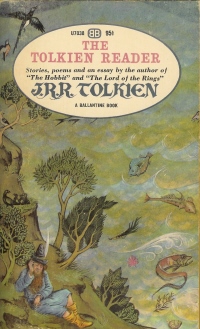
http://upload.wikimedia.org/wikipedia/en/c/c0/Tolkien_reader.jpg

Everybody has heard of The Lord of the Rings and The Hobbit, and most people have probably read them. Many people have also read The Silmarillion, which is less popular and slightly more difficult to read (though it's really not that bad and well worth it). Then there are Tolkien's other Middle-Earth related writings, published posthumously by his son and not as well known as The Lord of the Rings and The Silmarillion. Included in this group is The Children of Hurin, Unfinished Tales, and the extensive History of Middle-Earth series. The first of these is a longer retelling of one of the most tragic stories in The Silmarillion, the second a collection of somewhat miscellaneous writings by Tolkein that pertain to the Four Ages of Middle-Earth. The History of Middle-Earth is a series of books put together by Christopher Tolkien that chronicle the development of Middle-Earth and the larger world of The Silmarillion in Tolkien's writings.

But often overlooked are Tolkien's other writings that do not pertain directly to the world of Middle-Earth and The Silmarillion. These works are barely ever mentioned in conversations between fans of Tolkien, and many people (myself included until a few years ago) do not even know that these other books exist. But those who do know that they have found a treasure. These other works I speak of comprise short stories, poems, essays, and other miscellanea. By turns surprising, ponderous, funny, brilliant and beautiful, these are works that every Tolkien fan should read - and probably some other people who aren't Tolkien fans should read them, too. Here's the list:

1. The Tolkien Reader
2. Smith of Wooton Major
3. Letters from Father Christmas
4. Mythopoeia
5. The Fall of Arthur

Caution: This review may contain one or two brief rants, diverse literary references, and general reveling in the supreme awesomeness of Tolkien.


The Tolkien Reader


What Goodreads has to say:


An invitation to Tolkien's world. This rich treasury includes Tolkien's most beloved short fiction plus his essay on fantasy. 

[What? That's it?]
 

What I have to say:


First on my list is The Tolkien Reader. This little volume published during Tolkien's lifetime contains a short dialogue play, Tolkien's monumental essay "On Fairy-Stories," the only allegory he ever wrote, a short story, and several surprisingly wonderful and wonderfully surprising poems. The Tolkien Reader, more than anything else on this list, is the single Tolkien book apart from The Lord of the Rings and The Hobbit that I would urge every Tolkien fan to read. And the good news is that, because of its relative obscurity, you can usually buy the book for pretty cheap. I found it for $1.00 at a book-sale, picked it up, bought it, read it, and found that it changed me forever.

Let me tell you what is in this book. First there's an essay by Peter S. Beagle, which is kind of cool, if only because I love Peter Beagle (author of The Last Unicorn). But after this we get into the Tolkien part, and all of that just leaves Beagle's essay in the dust.

The first piece by Tolkien is "The Homecoming of Beorhtnoth, Beorhthelm's Son," which is a short play in the form of a dialogue between two characters. The scene takes place just after the famous Battle of Maldon, fought in the year 991 in England. This battle is the subject of an old Anglo-Saxon poem, now partly lost. Tolkien's dialogue picks up where the Anglo-Saxon poem ends: the battle is over, the invading Vikings have utterly defeated the Anglo-Saxon army, and two Anglo-Saxon men have been sent to the battlefield to find their leader's body and bring it back for burial. The play is at once like and unlike Tolkien's more familiar works. The younger of the two characters is a poet, and waxes poetic in the Epic Anglo-Saxon tradition, but the older man questions the poetry which glorifies the actions of heroes and omits the story of the common people. "The Homecoming of Beorhtnoth, Beorhthelm's Son" reminds me of some Early Modernist Irish plays I've read, and is vaguely reminiscent of the style of playwrights like Samuel Beckett and Tom Stoppard. Thus it is rather surprising coming from Tolkien, and yet it is also clear that no one but Tolkien could have written it.

Next in The Tolkien Reader comes Tolkien's monumental essay "On Fairy Stories," which I frequently wish that everyone had read, because it would be so much easier when I want to reference it, and, believe me, that happens a lot. This essay is probably the best argument I've ever heard for fantasy literature (though C. S. Lewis also wrote some very eloquent and convincing defenses of fantasy literature, especially for children - see On Stories and Other Essays on Literature). This essay also introduces the word "eucatastrophe" coined by Tolkien himself, which again I wish that everyone knew, because it would be SO helpful if I could reference it in discussions and papers. It's a very useful word to know, and it's also AWESOME. I'll just tell you what it means now. "Eucatastrophe" is a wonderful catastrophe, like the kind that occurs at the end of fairy tales; when everything looks darkest and it seems as if all hope is lost, something happens to reverse the situation. A good example is the end of Sleeping Beauty, when the prince kisses the princess and wakes her up. If you still don't understand what the word means, just think: "The Eagles are coming! The Eagles are coming!" and you'll probably get it. Of course, Tolkien explains it much better than I can, so read the essay. It is a little long, but extremely interesting and enlightening. It opens up your eyes to look at fairy tales and fantasy literature in a whole new way, and it also gives several arguments for the value of fantasy literature, which you can use against people who tell you that reading fantasy novels is a waste of time.

And now we come to my very favorite part of The Tolkien Reader (probably with the exception of the poems at the end): "Leaf By Niggle." This is the only allegory Tolkien ever wrote, and no, The Lord of the Rings is NOT an allegory, nor are The Chronicles of Narnia (though obviously Tolkien didn't write those). An allegory is a story in which every character and event represents something larger. Probably the most famous allegory is The Pilgrim's Progress. Allegories were very popular in Medieval England, especially as plays; there was usually one character named "Everyman" who represented the common man, as well as characters symbolizing things like virtue, sin, pride, honesty, etc. The Narnia books are not allegorical because, while many of the characters suggest things beyond themselves, they don't all represent something specific - they are characters in their own right. Also, Aslan does not symbolize Christ, he is Christ. Thus, people who say that The Lord of the Rings or The Chronicles of Narnia are allegorical usually don't know what they're talking about. And so "Leaf By Niggle" is Tolkien's only allegory. And, wow, is it amazing.

This piece tells the story of Niggle, a painter who knows he has to go on a journey someday, but keeps putting it off. He spends endless amounts of time working on his "masterpiece" a painting of a tree with many leaves, and often neglects or at least resents doing other "more important" things. But eventually a man arrives to take him on his journey, and he has to leave his painting and everything else behind. (What do you think the journey represents?) I'll stop the summary here and let you read the story for yourself; it's not very long. Once again, the story is startlingly different from all of Tolkien's other writings, yet also uniquely Tolkienesque. The story functions on multiple levels, including allegory and autobiography: Niggle resembles Tolkien himself in many ways (Tolkien was notorious for working forever on projects and frequently not finishing them). Yet in many ways "Leaf By Niggle" feels almost more like something written by Tolkien's friend C.S. Lewis, especially The Great Divorce. Read it once, figure out what everything in the story represents, and then maybe read it again. Like "On Fairy Stories," "Leaf By Niggle" changed the way I look at and think about art in all of its forms, and especially changed how I see the role of the artist himself.

"Farmer Giles of Ham," a longish short story about a country farmer who encounters a dragon, is the next work in the reader. While not as deep or meaningful as the previous works in the collection, this story is a lot of fun, and is very obviously written by Tolkien. It shares some similarities with The Hobbit, and in fact might be described as a very compressed, lighter version of The Hobbit. But of course it's not exactly the same; it's an original and enjoyable story in its own right. Read it and try to figure out what a blunderbuss is (and please let me know what it is when you find out).

The final pages of The Tolkien Reader contain a collection of poems written by Tolkien, entitled, "The Adventures of Tom Bombadil and Other Verses from the Red Book" so it's hobbit poetry!! How exciting is that?? Anyway, the collection starts off with two poems about Tom Bombadil, for all the Bombadil fans out there (you know who you are), then launches into a series of diverse and wonderful poems. There's one that's super creepy, another about a mariner that's super fun and, I think, the source of the name "Dumbledore." Then there are some that are just lighthearted playing around: there's one about a cat dreaming about his ancestors, another about an oliphaunt (probably written by a certain hobbit that you know well), one about a shadow-bride, and another with a troll in it. But my favorite are the last two. "The Sea-Bell" (also known in the Red Book as "Frodo's Dream") is my very favorite. I read it over and over again. It is so beautiful and so desolate. The first time I read it, I was rather startled - once again it was so unlike anything and everything else I'd ever read by Tolkien. It almost seemed more like something T.S. Eliot might have written, especially considering certain passages in "The Love Song of J. Alfred Prufrock." And, when I read this poem, I realize how great of a poet Tolkien was. "The Sea-Bell" both soothes and stirs, setting something deep within me into motion.

The final poem tells of the meeting of a mortal princess with one of the last boats of elves headed for the Undying Lands. It is lovely, lyrical, and faintly sorrowful in the way that much of Tolkien's writing is. This piece was clearly written by the author of The Lord of the Rings.

Hey, are you still here? Well, since it took me that long to get through only The Tolkien Reader, I think I'll save the other works on my list for another time. And don't worry, they won't take as long as this one did. In the meantime, the good news it that I've already reviewed The Fall of Arthur! I will get through every work on this list someday - but it is not this day.

Thursday, May 1, 2014

Werewolves, and Demons, and Grey Blobs, Oh My!

Werewolf Parallel

20504137 

Title: Werewolf Parallel (Daemon Parallel #2)
Author: Roy Gill
Series: Daemon Parallel
Publisher: Kelpies
Publication Date: March 20, 2014
Source: Netgalley

Goodreads Summary: "The wolf has woken..."

Cameron's life of shifting between the Human and Daemon worlds is under threat.

Two sinister figures want to destroy the Parallel - the realm between the worlds populated by daemons, dark creatures, old gods and werewolves - and everyone in it.

To save the Parallel, Cameron must make the ultimate sacrifice, but what is he prepared to lose?

 My Thoughts:
I was so excited for this book - and it did not disappoint. This book was fantastic. I loved every moment of it and had a very hard time putting it down. The characters were great and the plot was so much thicker than the first book. I also loved how much more of the Parallel we were able to see in this book. I really enjoyed the plot twists and general awesomeness of the novel. 


WARNING SPOILERS!


So, let's talk about the werewolves. MORGAN IS THE SON OF THE FREAKING QUEEN??!??! Okay, calming down. That was like, crazy revelation to me, anywho . . . I loved the scenes with the werewolves. I really liked the dynamics between the queen and the king, and especially how the other wolves treated Morgan. I really loved the trust that the queen had in Morgan even though he didn't have it in himself. And when Cameron was totally awesome and shifted outside of the wolf moon? Goodness gracious I was like - take that snarky wolf king! Yeah, I really liked the wolves. 

Eve - can I just say I totally knew she was related to Cameron? She was so awesome in this, I was really impressed that even though she's younger than the boys because she looks older she has to be the responsible adult. But she still made a choice - instead of simply giving up and still acting like a kid, Eve takes the jump and stays in control. I really admired the courage that it took her to impersonate Granny Ives. 

Cameron was amazing in this book. Not only was he totally boss with his mad wolf skills, but he saved his friends time and time again simply by being himself and remembering things - like when the lion was going to eat Eve. He really showed his true colors when he not only gave leadership of the wolf pack back to the queen, but when he gave up his inner wolf in order to save the parallel. He gave up on of the best things that had ever happened to him because he's that kind of kid. 

I must admit that I was quite confused that Janus made an appearance in this novel since he is a Greek god, and most things in these novels tend to lean towards Celtic . . . but I still enjoyed it. I liked how he was incorporated into the story and the twistedness of his character.

 Mr. Grey was totally nasty. I did not like him at all - and I think that was expected. He was everything you love to detest in a bad guy - so good job Gill. I did think it was a really interesting twist that there was only really one Grey but that he could separate himself into lots of parts. He was someone who you really wanted to get squashed. I was super happy when Cameron finally "took care of him". 

Lastly I want to mention Cameron's shadow wolf. I loved how at the end Morgan mentioned that he sometimes sees the wolf guarding the parallel. It's like the wolf is all of Cameron's love of the parallel put into a shadow - this is not something totally separate from Cameron - the wolf is born out of his love and desire to protect the parallel, which is completely awesome.

I would recommend this book to basically everyone because I thought it was great.

 Rating: 
 

Tuesday, April 22, 2014

Daemon Parallel by Roy Gill

Daemon Parallel

20504167 

Title: Daemon Parallel
Author: Roy Gill
Series: Daemon Parallel
Publisher: Kelpies
Publication Date: March 20 2014
Source: Netgalley

Goodreads Summary: "Worlds collide. Promises broken."

Cameron's father is dead and his inheritance is... rather unusual.
He has the power to world-shift: travel between the Human and Daemon dimensions and the Parallel - a realm where the two worlds meet.

Between battling daemons and allying with werewolves, Cameron's new life is already pretty complicated but things are about to get even more dangerous...

My Thoughts: This book was great. Super fun and interesting - even though I'm not a thirteen year old boy. I thought the idea of having parallel worlds that can be crossed simply by activating the right music in your mind was totally awesome. I also thought it made total sense that the parallel was strongest in Edinburgh because it is one complicated city with lots of layers and stories on every corner. One of my favorite things about this book was that Cameron wasn't trying to save the world - he wasn't the chosen one who had to stop mass destruction, and there was no romance. It was just a magical adventure story for middle graders, although still with plenty of depth and great characters. 


WARNING: SPOILERS!


   Creatures and Compassion: Something that I found super interesting about this book is that it wasn't necessarily the "humans" that were the right ones or even the caring ones. Instead it was mostly the young ones - Eve, Morgan and Cameron. Even though Morgan is a werewolf he has compassion - although Morgan needed the Temporari claw egg thing in order to get himself out of his deal with Mrs. Ferguson he still gave it to Cameron. That's sacrifice - especially when you don't think a resurrection spell is possible. That's the great thing about Morgan, even though he doesn't really believe that Cameron's dad can ever come back he's willing to help Cameron out as much as he can because he's a good person. Then there's Cameron, even though he knows Morgan won't be able to control himself in werewolf form, he stays by his side and keeps the pack from finding out - thus saving Morgan from being cast out. That's also sacrifice - being willing to put yourself in danger in order to help those around you. Finally there's the scene where Morgan and Cameron go back to Ferguson and destroy her, but not before exorcising her out of Eve's body and thus giving Eve another chance at life.

   Monsters and Murder: In this story the real monsters are able to hide in plain sight. Mrs. Ferguson pretends first to be an old lady and then Eve. She seems perfectly harmless from the outside - but within is a spider-like daemon who will consume those around her in order to live longer. Grandma Ives also appears to be a kind old lady - albeit stern - who obtains hard to get items for her customers. She seems completely human and even kind when she takes in her orphaned grandson. But, it turns out she is much more like Mrs. Ferguson than she would like to admit. In the end, just as Mrs. Ferguson had possessed Eve, Grandma Ives intends to suck out Cameron's essence in order to prolong her life. And, in the end, just like Mrs. Ferguson, the one thing she didn't count on was Cameron and Morgan. The reason Grandma Ives is sent to Daemon is not only because of Morgan's attack, but because of Cameron genius. 

So, there you have it, the message of this book is that you should never overlook those around you who may seem insignificant because they could have more power than you can ever guess.

Rating:
 

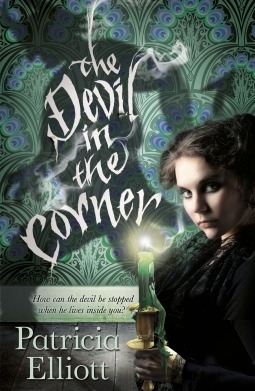
The Devil in the Corner - A Gothic Tale

The Devil in the Corner

20728920 

Title: The Devil in the Corner
Author: Patricia Elliott
Series: N/A
Publisher: Hachette Children's Books
Publication Date: March 6 2014
Source: Netgalley

Goodreads Summary: A gorgeously Gothic historical tale.

 Penniless, and escaping the horrors of life as a governess to brutal households, Maud seeks refuge with the cousin-by-marriage she never knew. But Juliana quashes Maud's emerging friendships with the staff and locals - especially John, the artist commissioned to restore the sinister Doom in the local church. John, however, is smitten with Maud and makes every effort to woo her.

Maud, isolated and thwarted at every turn, continues to take the laudanum which was her only solace in London. Soon she becomes dependent on the drug - so is this the cause of her fresh anxieties? Or is someone - or something - plotting her demise?

Is the devil in the corner of the Doom a reality, or a figment of her imagination?
 

My Thoughts:  While I enjoyed reading this book, I thought it was very strange and confusing - which relates back to the fact that it is written in a Gothic style. 
     Gothic Style: The typical Gothic style, most notably employed in The Castle of Otranto and then later by Edgar Allan Poe, mixes elements of Romanticism, horror, and fiction together. The result is a novel which is dark, and mysterious, often with an unreliable narrator, and events which never fully explain themselves. An example of this is in Poe's The Fall of the House of Usher in which it is assumed that Madeleine rising from the grave was simply a figment of Roderick's imagination because of the poisonous fumes surrounding the house, and the dangers of incest, it is also assumed that many of the fantastical events in the story occur because of the narrator's unreliability. However, Poe never sets in stone if those are in fact the reasons for those events. Elliott used many of these same elements in Devil in the Corner in order to paint her Gothic tale.


WARNING: SPOILERS!


Beginnings: This is not a warm and fuzzy book. It's dark and the characters are twisted and confusing - they have many layers and the reader never fully understands them. The main character - Maud has had an awful life since her father died a few years ago. Employed as a governess she has worked at three different house holds where she encountered abusive and horrible children, and groping masters. She thinks she is a horrible person and in order to stop nightmares of the horrible things which have happened to her she drinks laudanum every night before bed. When she gets a letter from her step cousin inviting her to stay permanently at her house and keep her company, she is over joyed, believing that her horrible past is behind her. 
Juliana however is not what she seems - she is demanding, controlling and mean. Maud however feels indebted to her and takes care of her.
Enter John. John is the painter who has been called to restore a painting of the Last Judgment (The Doom) found in the church - Juliana is his patron. John and Maud fall in love, but he feels that he cannot support her as an artist and because of an embarrassing dinner party, John breaks off the relationship and returns to London. Maud feels like all the sunshine has left her life. It doesn't help that another girl in town - Edie, also loves John and actually receives letters from him.
Maud begins to run out of laudanum and because Juliana will give her no money resorts to stealing it from the drugstore. She goes to relieve Edie when her mother takes a fall and when searching for the drug stumbles upon arsenic and the miracle medicine that almost everyone in the village takes.

Death: Then, people start dying. First the lunatic who works at the manor and follows Maud. Next, the Butcher's son, who treats women like meat. As they die their pictures appear crudely drawn in charcoal on The Doom. Juliana gets worse, from thinking that she is dying, to actually dying. Many of the maids get dismissed until only a few are left. The remaining ones are frightened of Maud saying that at night she wanders the house. Maud does not know what they are talking about, and takes more laudanum in order to calm her nerves and drown out her sorrow. Then, Juliana dies. 


Guilt: Maud is accused of killing her cousin because she is the heir to the estate, the poison - arsenic. The strange thing is that although Maud never explicitly says she killed Juliana - she doesn't say she didn't either. She seems just as confused about it as everyone else is. One of the maids accuses her of using the recently found rat poison to kill Juliana and of drawing the pictures on The Doom. They lock her in her room - with the devil in the corner. Maud sees him clearly - a monster that sees who she truly is and knows of her wickedness. The next morning the police come and take Maud into custody to await her trial.

Trial: John finds out that Maud has been accused of Juliana's death - and because he is still very much in love with her finds the best detective he can to clear her charge. It is when they are investigating that the detective discovers large chunks of wallpaper have been torn off of the wall behind Juliana's bed. It appeared that when in distress Juliana would tear the wallpaper - the wallpaper which contains large amounts of arsenic. It is determined by the jury that the wallpaper was the cause of death - and not Maud. She is cleared, but she is still not sure. While in custody she was separated from her laudanum, which gave her head time to clear, and she can remember very little from the time of Juliana's death because of the power of the drug. 

Endings: Now that Maud is the owner of the estate and John has gotten a study job in London, he comes back for her. The novel ends with Maud running into John's arms.

Ambiguous Much? So, I read the entire book, and while I would love to believe that Maud didn't really kill all those people, I still don't know. Maud is an unreliable narrator, the reader cannot believe everything that Maud tells them because she is drugged and disturbed for most of the novel - she cannot think clearly and often has hallucinations. That's one of the reasons that I can't give this book more than three stars - I was super confused for most of it, and found the hallucinations quite disturbing. I think if someone was writing a report or doing a project on Gothic stories and how they have changed over time, I would definitely tell them to read this, but otherwise don't. While this book kept me reading it was more because I was hoping that everything would make sense in the end. I was hoping it would be like a detective novel where everything is figured out and explained in the end, and it wasn't.

Rating:

Tuesday, April 15, 2014

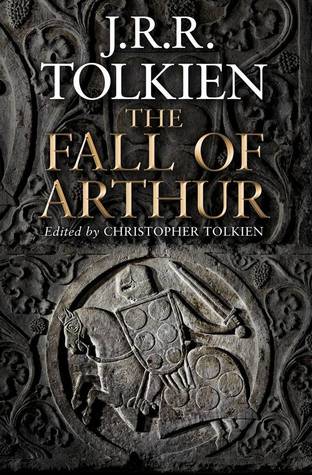
The Fall of Arthur: Unfinished Masterpiece

16075147
Title: The Fall of Arthur
Author: J.R.R. Tolkien
Date of Publication: 2013
Publisher: Houghton Mifflin Harcourt

What I have to say:

I have never read another book in which the words themselves were such a source of delight.

We always talk about how Tolkien was a linguist - and sure, he invented a pretty awesome language for the elves, and the writing in Lord of the Rings is wonderful, but - holy cow!!! The Fall of Arthur is amazing!!!

Listen to this:
"Guinever hiding   in the grey shadow 
watched and waited,   while the world faltered" (III.181-82).

And this:

Wolves were howling   on the wood's border;
the windy trees   wailed and trembled,
and wandering leaves   wild and homeless
drifted dying   in the deep hollows.
Dark lay the road   through dank valleys
among mounting hills   mist-encircled
to the walls of Wales   in the west frowning
brownfaced and bare.   To the black mountains
horsemen hastened,   on the houseless stones
no track leaving.   Tumbling waters
from the fells falling,   foaming in darkness,
they heard as they passed   to the hidden kingdom.
Night fell behind.   The noise of hooves
was lost in silence   in a land of shadow. (IV.1-14)  

I hope you enjoyed that as much as I did. And that is just a sample from Tolkien's narrative poem on the downfall of Camelot - his only venture into Arthurian legend according to the dust jacket, though, as someone pointed out on Goodreads, he also wrote this thing called Sir Gawain and the Green Knight. The poem is thoughtful, masterful, breathtaking, and, catastrophically, unfinished. Despite the comment from one of his friends that, "You simply must finish it!" this is another work that Tolkien never finished. The upside of that is that it's a quick read - only 57 pages, 70 if you count the notes on the text. And commentary by Christopher Tolkien on the larger context of the poem, both in Arthurian tradition and in Tolkien's writings in general, as well as on the evolution of the poem, follows the authorial text (I'm sure it's very interesting, but I didn't read it).

Here's what Goodreads has to say:

The world's first publication of a previously unknown work by J.R.R. Tolkien, which tells the extraordinary story of the final days of England’s legendary hero, King Arthur.

The Fall of Arthur recounts in verse the last campaign of King Arthur who, even as he stands at the threshold of Mirkwood, is summoned back to Britain by news of the treachery of Mordred. Already weakened in spirit by Guinevere's infidelity with the now-exiled Lancelot, Arthur must rouse his knights to battle one last time against Mordred's rebels and foreign mercenaries.

Powerful, passionate and filled with vivid imagery, The Fall of Arthur reveals Tolkien's gift for storytelling at its brilliant best. Originally composed by J.R.R. Tolkien in the 1930s, this work was set aside for The Hobbit and lay untouched for 80 years.

Now it has been edited for publication by Tolkien's son, Christopher, who contributes three illuminating essays that explore the literary world of King Arthur, reveal the deeper meaning of the verses and the painstaking work that his father applied to bring it to a finished form, and the intriguing links between The Fall of Arthur and his greatest creation, Middle-earth.


[Also, this book was a goodreads choice winner for poetry in 2013, because Tolkien is just so good that he can still win awards for his literature after being dead for 41 years.]